Rug terminology can feel unnecessarily confusing. One retailer says “handmade”, another says “handloomed”, and a third uses “hand-finished” as if it means the same thing. Yet the construction method — how the rug is actually built — directly affects how it performs in your home: how it feels underfoot, how it wears in busy areas, how it handles pets and furniture, whether it can be repaired, and how long it will look good.
This guide explains the four most common rug construction types — hand-knotted, hand-tufted, handwoven, and machine-made — in clear, practical terms, so you can buy with confidence (and avoid paying premium prices for the wrong thing).
Table of contents
- The 10-second summary
- Why rug construction matters
- Hand-knotted rugs
- Handwoven rugs
- Hand-tufted rugs
- Machine-made rugs
- Luxury & lifespan: what lasts longest
- Made-to-order rugs for wall-to-wall luxury and custom shapes
- How to choose the right type for each room
- Common terminology traps (what marketers don’t explain)
- Underlay: the upgrade most people skip
- FAQs
The 10-second summary
If you only remember one thing, make it this: construction determines structure — and structure determines durability, maintenance, and long-term value.
- Hand-knotted: individually tied knots; typically the longest-lasting and most repairable over time.
- Handwoven: woven on a loom (flatweave or woven structures); often high quality and durable, depending on weave density and fibre.
- Hand-tufted: yarn is tufted through a backing and secured with adhesive; can be luxurious and thick underfoot, but typically won’t outlast hand-knotted (and many tightly woven rugs) in heavy traffic.
- Machine-made: made on power looms; quality ranges widely; performance depends heavily on fibre type and density.
Why rug construction matters (more than you think)
Two rugs can look almost identical online — same colour family, similar pattern, similar pile height — yet age completely differently. That’s because construction impacts:
- Lifespan: how long the rug holds its shape, pile and finish
- Wear pattern: whether it ages gracefully or flattens quickly in traffic lanes
- Repairability: whether it can be re-fringed, re-bound, re-piled or patched
- Shedding: how much loose fibre you’ll see early on
- Comfort: how plush it feels and how it insulates a room
- Stability: whether it creeps, ripples, or sits flat
Construction isn’t the only variable, but it’s one of the few that reliably predicts long-term performance.
Hand-knotted rugs: the benchmark for longevity
A hand-knotted rug is made by tying individual knots onto warp threads on a loom. This knot-by-knot method is slow, highly skilled work — and it creates a structure that is exceptionally stable.
What makes hand-knotted special?
- Inherent structural strength: The pile is anchored by knots rather than glue.
- Repairable over time: High-quality hand-knotted rugs can often be restored rather than replaced.
- Design detail: Finer knotting can produce crisp patterns and more complex motifs.
- Aging gracefully: When properly cared for, hand-knotted rugs often develop character rather than simply “wearing out”.
Best suited to
- High-traffic living areas
- Statement spaces where you want a long-term piece
- Homes where longevity and restoration potential matter
What to look for (simple checks)
- Back of the rug: The pattern is usually visible on the reverse (not necessarily perfect, but clearly present).
- Minor irregularities: Subtle variations can be a sign of true handwork (perfection isn’t always the goal).
- Quality finishing: Clean edges, secure binding, and well-finished corners.
For more information read CARPETS iii. Knotted-pile carpets: Techniques and structures.
Typical lifespan: 25 years to decades (depending on fibre, density, traffic, and care).
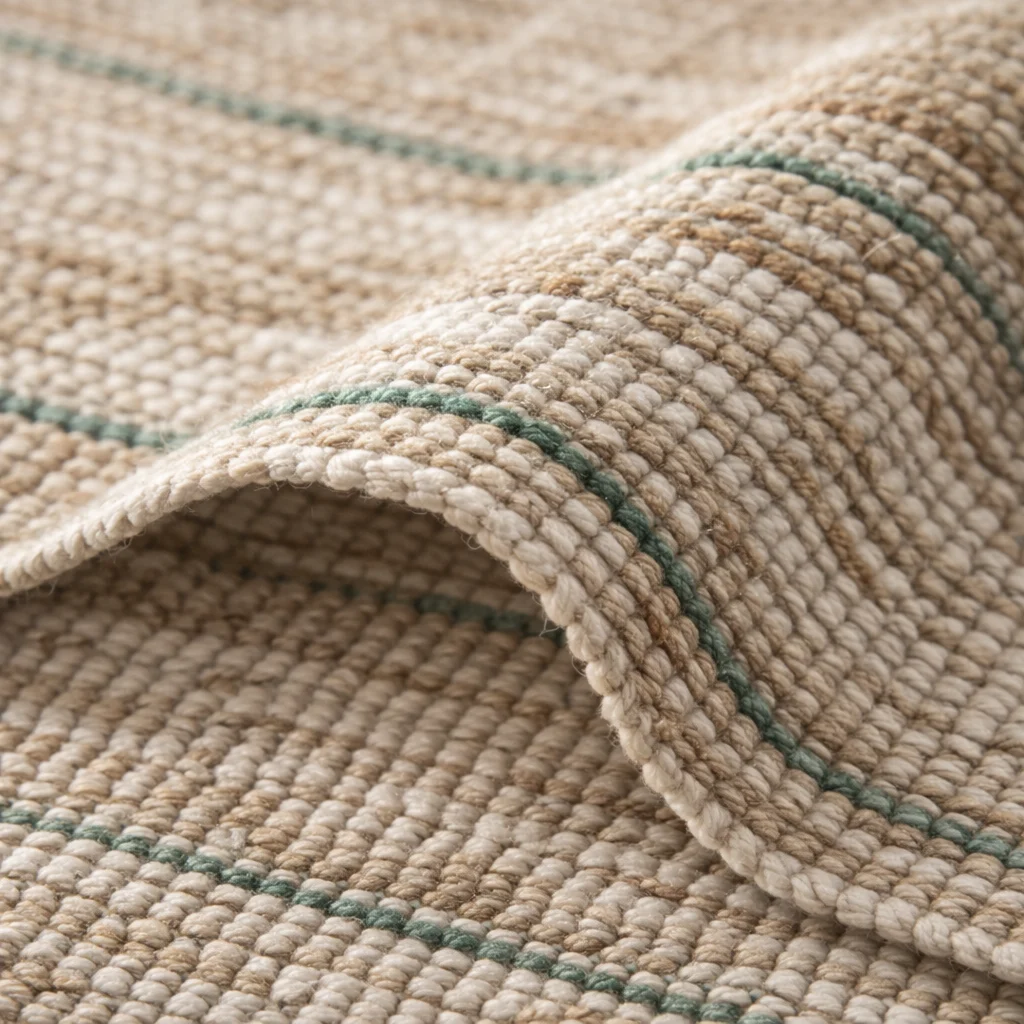
Handwoven rugs: artisan texture with strong performance
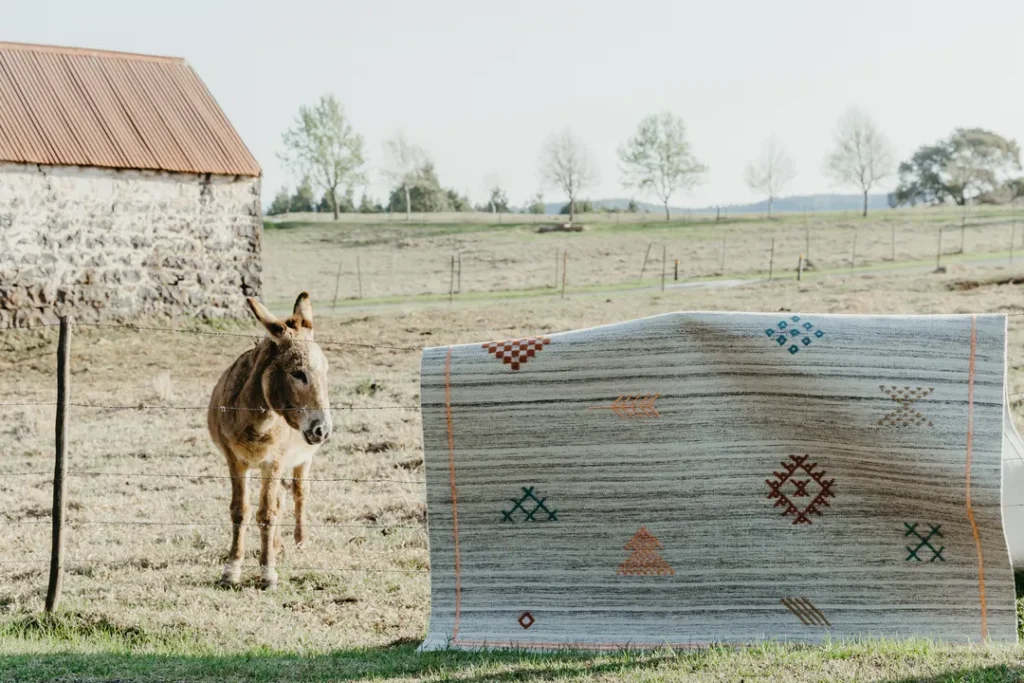
“Handwoven” is a broad category — and that’s exactly why buyers get confused. Handwoven rugs are made on a loom, but they can be:
- Flatweave (no pile, like dhurries / kilims), or
- Woven structures that may include pile or textured weaves
Why people love handwoven rugs
- Texture and character: A handwoven rug brings a layered, design-led feel to a room.
- Practicality: Flatweaves sit well under furniture and are often easier to manage in dining rooms.
- Durability potential: A dense, well-made handwoven rug can be extremely hard-wearing.
Best suited to
- Hallways and passages (especially flatweaves and dense weaves)
- Dining areas (chairs move more easily over low pile / flatweave)
- Layering in living rooms and bedrooms
- Homes that prefer a tactile, artisan aesthetic
Buying insight
Handwoven does not automatically mean “better than everything else”. The real performance drivers are:
- Weave density / tightness
- Fibre type and spin
- Finishing quality (edges, binding, backing where applicable)
Typical lifespan: 10–25 years.
Hand-tufted rugs: plush comfort with a different structure
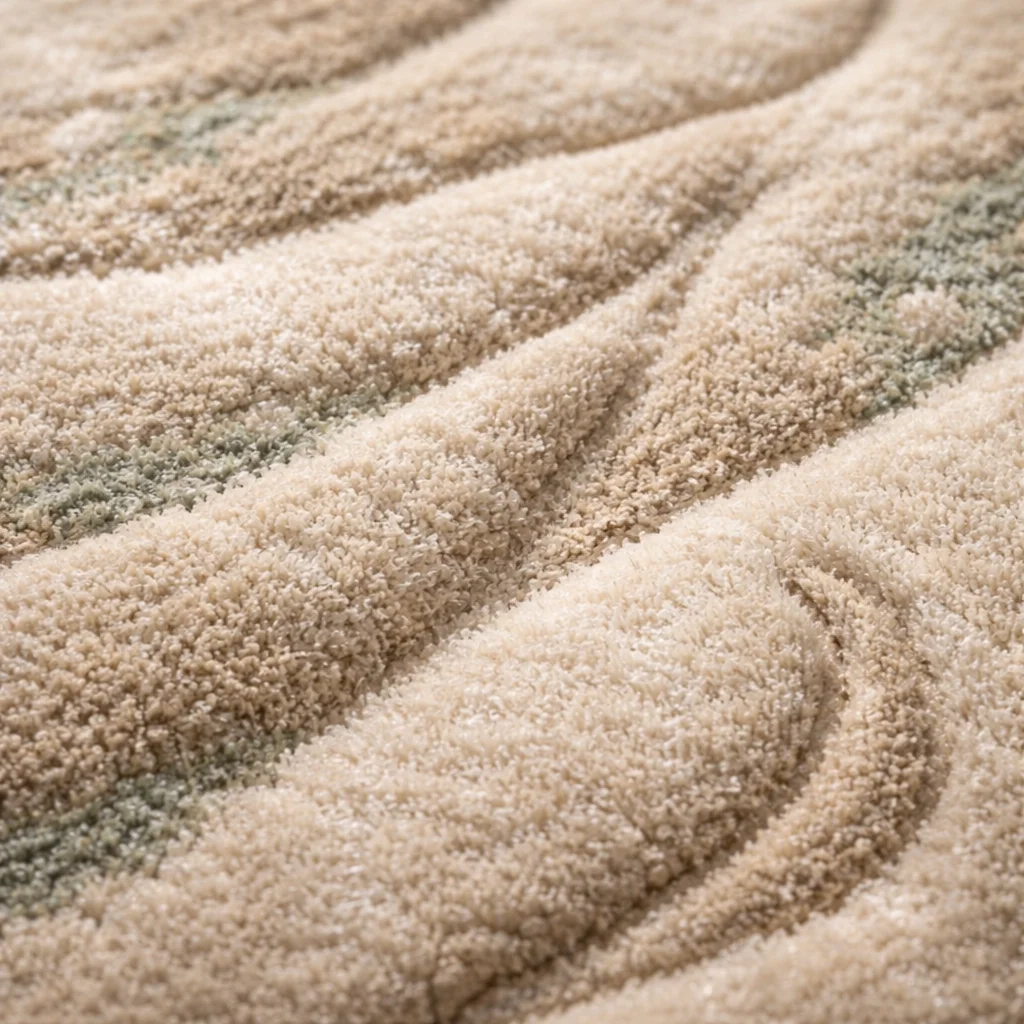
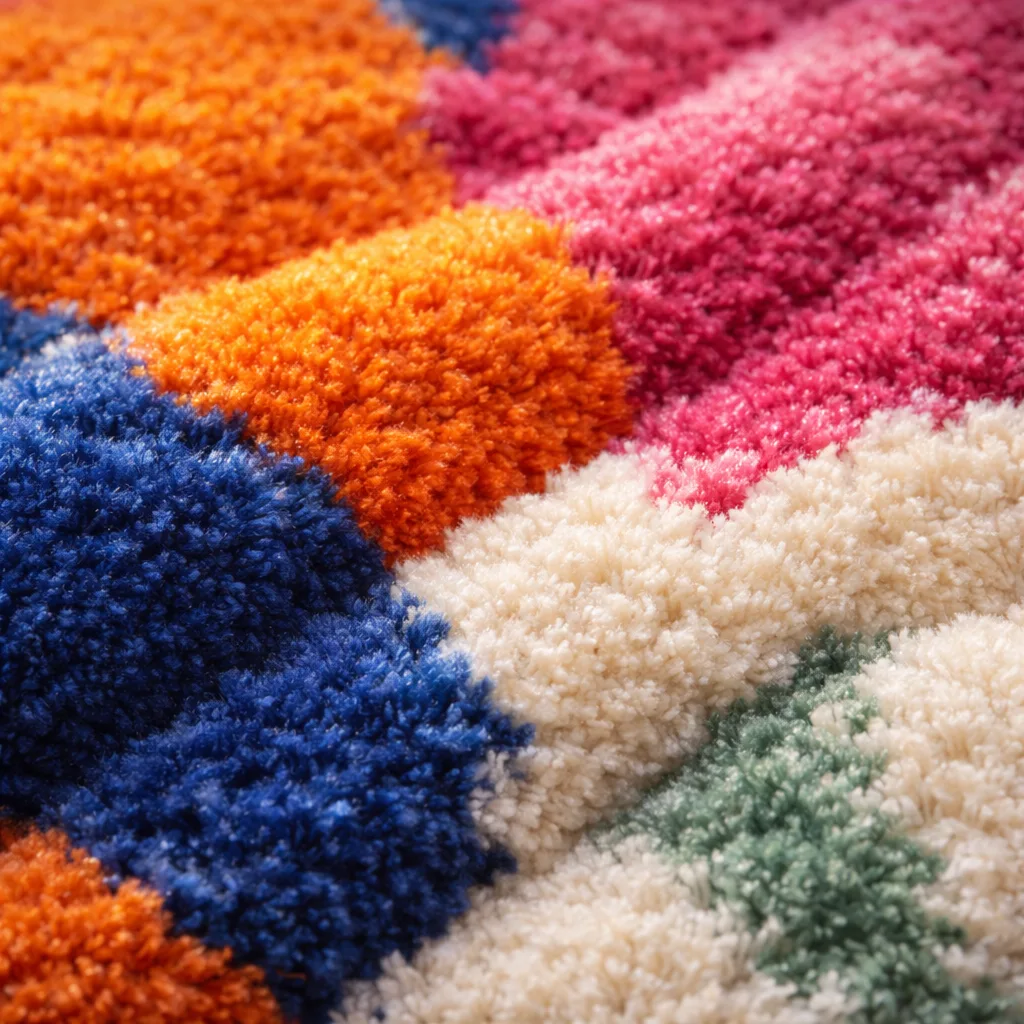
Hand-tufted rugs can feel exceptionally luxurious underfoot. They’re often thicker, softer, and visually rich — which is why they’re popular in bedrooms and comfort-first spaces.
But the construction is fundamentally different from knotted or woven rugs.
How hand-tufted rugs are made
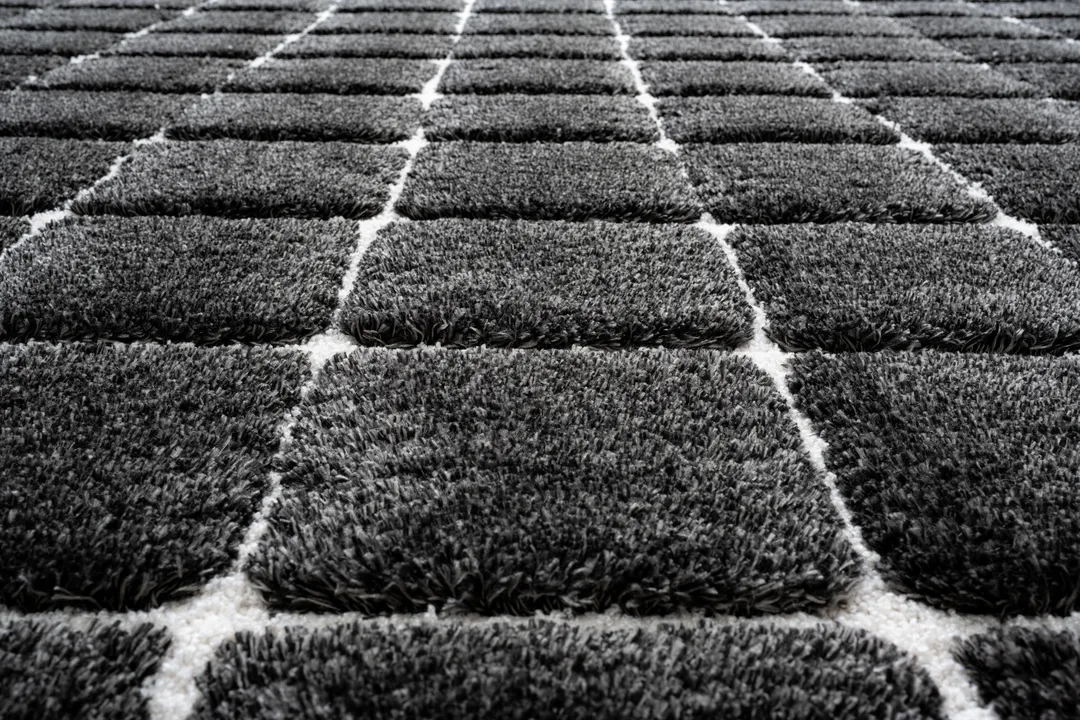
Instead of tying knots, yarn is tufted through a backing (often with a tufting gun), then secured with adhesive, and finished with a secondary backing.
What this means in real life
- Comfort is a strong advantage: Many hand-tufted rugs have a dense, plush feel.
- Performance depends on backing quality: The longevity of a tufted rug is heavily influenced by the adhesive and backing system.
- Traffic matters more: In demanding areas, tufted rugs typically won’t last as long as hand-knotted and many tightly woven rugs.
Best suited to
- Bedrooms
- Lounges with moderate traffic
- Feature rooms and softer step areas
- Homes prioritising plushness and warmth
Typical lifespan: 10–15 years.
Machine-made rugs: quality varies — fibre matters most
Machine-made rugs are produced on power looms. They offer consistency and scalable production, and in many homes they can be an excellent practical choice. The key is understanding that machine-made is not a single quality level — it’s a manufacturing method.
Fibre matters (a lot)
If you want a quick performance shortcut, start with fibre:
- Polypropylene (Olefin): often the most budget-friendly. Typically lasts about 3–6 years with regular use, as fibres can flatten in high-traffic areas.
- Polyester: generally lasts around 5–10 years. Offers good stain resistance, but may be less resilient than nylon over time.
- Nylon: known for resilience and durability. A quality nylon rug can last 10–15 years, making it one of the more dependable synthetic options.
Best suited to
- Busy family homes
- Rentals and holiday homes
- Practical spaces where easy care is the priority
- Large rooms where you want strong styling without committing to a permanent piece
Typical lifespan: 5–10 years (with exceptions on both ends, depending on fibre and density).
Luxury & lifespan: what lasts the longest?
Outcomes vary by material, density and care, but in a luxury context this hierarchy is the most reliable buying lens:
Luxury + lifespan (highest to lowest):
Hand-knotted → Handwoven → Hand-tufted → Machine-made
Typical lifespan ranges
- Hand-knotted: 25 years to decades
- Handwoven: 10–25 years
- Hand-tufted: 10–15 years
- Machine-made: 5–10 years
Made-to-order rugs for wall-to-wall luxury and custom shapes
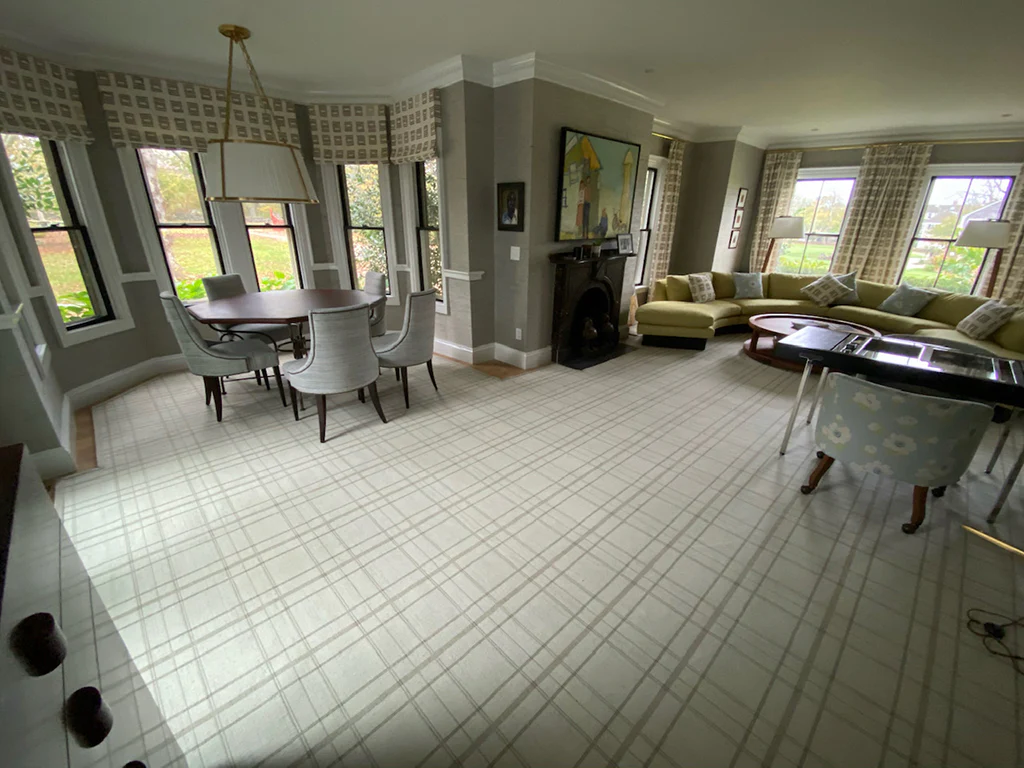
If you’re aiming for a truly elevated wall-to-wall look, an oversized statement rug, or a custom shape (rounds, ovals, perfectly proportioned runners, or unique layouts for large open-plan spaces), the best route is a made-to-order rug.
Made-to-order allows you to specify the details that matter at a luxury level — exact sizing, proportion, shape, border style, pile height, and fibre selection — so the finished piece fits your space precisely and performs as intended.
At Woven Bliss, our made-to-order rugs use only premium materials, including:
- Merino wool
- Karakul wool
- Mohair
- Silk
- Viscose
- Bamboo silk
If you’re considering a larger, more luxurious rug or a tailored design for a specific room, we recommend contacting us via our Made to Order page so we can guide you on construction type, fibre selection, and the best finish for your space.
CTA suggestions (buttons):
Comparison table (quick reference)
| Type | How it’s made | Typical lifespan | Best for | Key trade-off |
|---|---|---|---|---|
| Hand-knotted | Knots tied individually | 25 years to decades | investment rugs, high-traffic luxury spaces | slow, highly skilled production |
| Handwoven | Woven on a loom | 10–25 years | hallways, dining, layering, artisan texture | durability varies by weave density |
| Hand-tufted | Tufted into backing, secured with adhesive | 10–15 years | comfort-first rooms, plush feel | backing system influences longevity |
| Machine-made | Power-loomed | 5–10 years | busy homes, rentals, easy care | quality varies widely; fibre matters |
How to choose the right rug type for each room
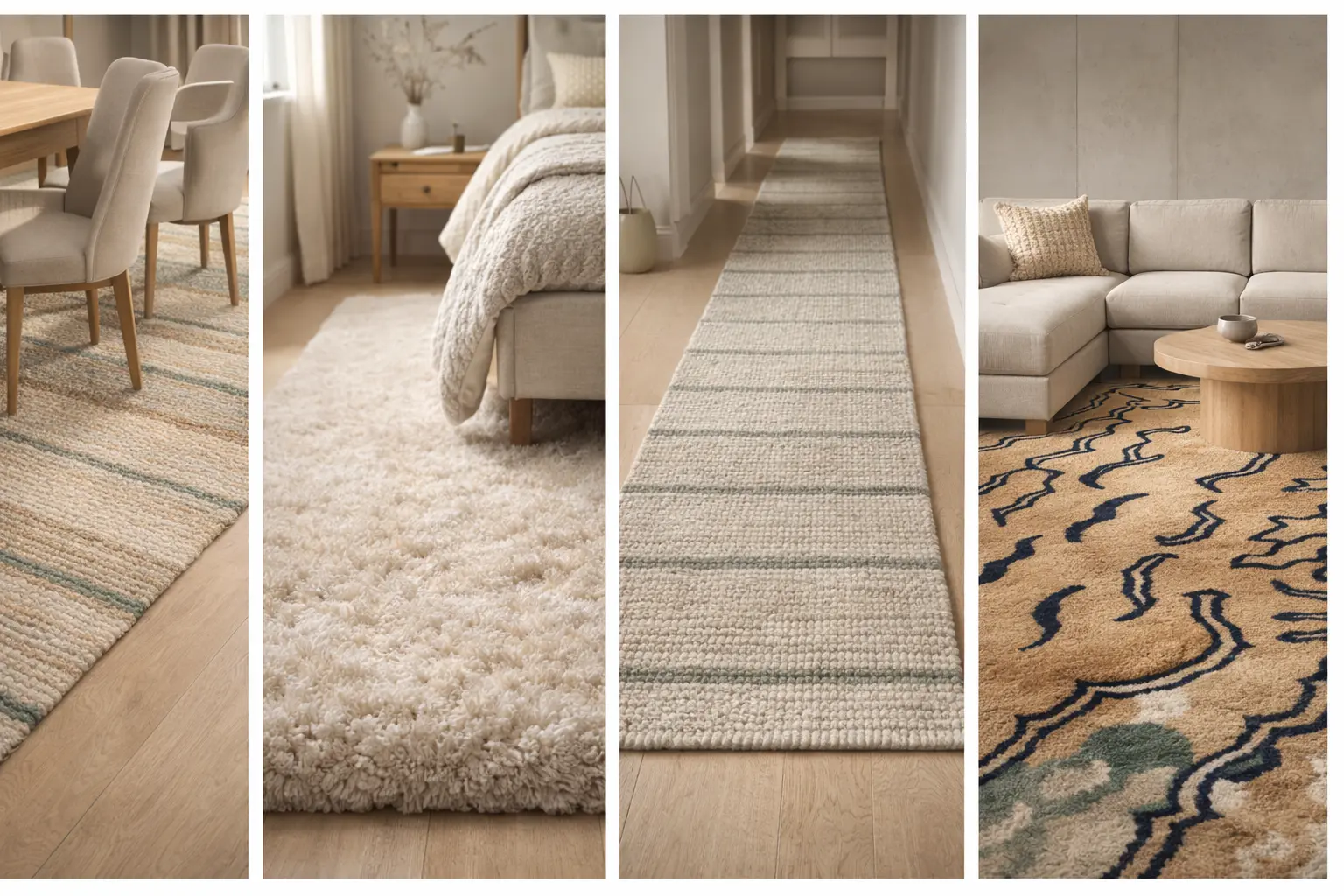
A smart purchase isn’t only about “best overall” — it’s about matching construction to how the space is used.
Living room (high traffic + furniture movement)
- Best choices: hand-knotted; dense handwoven; premium machine-made (especially resilient fibres)
- Why: living rooms develop traffic lanes and furniture marks; structure needs to hold up long-term.
Bedroom (comfort-first)
- Best choices: hand-tufted; handwoven; machine-made
- Why: generally lower traffic, so you can prioritise softness and warmth.
Dining room (chairs = constant friction)
- Best choices: flatweave handwoven; low-pile machine-made; durable, tight weaves
- Why: chairs catch and scrape pile. Lower pile is usually more practical.
Hallways and passages (traffic lanes are unavoidable)
- Best choices: dense handwoven; hand-knotted runners; premium machine-made runners
- Why: narrow spaces exaggerate wear. Density and stability matter.
Kids’ rooms (spills + cleaning)
- Best choices: easy-care machine-made; low-pile woven options
- Why: practical maintenance usually wins here.
Outdoor/patio spaces
- Best choices: purpose-built outdoor rugs (designed for UV and moisture)
- Why: indoor constructions won’t enjoy constant sun and damp.
Common terminology traps (what marketers don’t explain)
A quick warning: terms like “handmade”, “hand-finished”, and “handloomed” can be used loosely.
1) “Handmade”
This can mean hand-knotted, handwoven, hand-tufted — or simply hand-finished edges. Always ask which construction method.
2) “Handloomed / handloom”
Usually means woven on a loom (handwoven), not necessarily knotted.
3) “Hand-finished”
Often means the rug was machine-made, then edged, fringed, or trimmed by hand. That can be a quality detail — but it does not automatically equal handmade construction.
4) “High knot count” as a universal quality stamp
Knot count can matter in hand-knotted rugs, but it’s not the only indicator. Fibre quality, finishing, density, and intended use matter just as much.
Underlay: the simplest upgrade most buyers skip
If you want a rug to look better, feel better, and last longer, use the right underlay. Underlay helps to:
- Reduce movement and friction (slows wear)
- Improve comfort and insulation
- Protect the backing and edges
- Help rugs sit flatter and more safely
This is especially important for runners, passages and stairs, where movement and abrasion are higher.
Frequently Asked Questions
Quick answers to the most common questions about rug construction, performance, and longevity.
Check the back of the rug. In a true hand-knotted rug, the pattern is usually visible on the reverse and the structure is formed by knots rather than a fabric backing covering adhesive.
They can, particularly early on and especially with wool. Shedding typically reduces with regular vacuuming, but fibre quality and backing construction make a significant difference.
Not inherently. Machine-made rugs range from entry-level to premium. Fibre type and density are key indicators of performance; nylon is generally one of the most resilient synthetic options.
In most homes, hand-knotted rugs and dense handwoven rugs are the best long-term performers. Premium machine-made rugs can also do very well when selected for resilient fibres and high density.
Lower pile and denser structures are typically easier to maintain. Choose resilient fibres and use a stable underlay to reduce movement and abrasion, which also helps extend lifespan.
Yes. Underlay reduces movement and friction—two major causes of premature wear—and improves comfort and stability at the same time.
Choose made-to-order when you want a wall-to-wall look, an oversized luxury rug, or a custom shape and exact proportions. You can explore options via our Made to Order page.
Final takeaway
When you understand construction, you stop buying rugs by vague labels and start buying them by performance. As a rule of thumb:
Hand-knotted is the long-term investment.
Handwoven offers artisan texture with excellent durability potential.
Hand-tufted delivers plush luxury with best results in moderate-traffic spaces.
Machine-made can be highly practical — and fibre choice is the key to performance.
If you want a wall-to-wall look, an oversized statement piece, or custom proportions, start with Made to Order — it’s the most direct path to a rug that fits your space perfectly and does justice to the materials and craftsmanship.
+