Rug Styling Ideas for Safari Lodges, Boutique Hotels and Luxury Retreats in South Africa
In hospitality design, the floor should never be treated as an afterthought. In a safari lodge, boutique hotel or luxury retreat, every material contributes to the guest experience — from the lighting and textiles to the finishes underfoot. Rugs do more than soften a room visually. They add warmth, define spaces, improve comfort, and help create the layered, memorable atmosphere that guests associate with premium hospitality.
For properties in South Africa, rugs can also play another important role: they help connect the interior to the surrounding environment. Whether the setting is bushveld, coastline, vineyard, mountain retreat or a design-led urban destination, the right rug can anchor the space while reinforcing a sense of place.
Below, we explore practical and elegant rug styling ideas for safari lodges, boutique hotels and luxury retreats, with a focus on comfort, durability and refined design.
Why Rug Styling Matters in Hospitality Interiors
In commercial hospitality spaces, good design must do more than look beautiful in photographs. It must welcome guests, support comfort, and make the property feel intentional from the moment someone arrives. Rugs are one of the most effective ways to achieve this.
A well-chosen rug can soften hard flooring, reduce the visual coldness of large open rooms, and create a more intimate atmosphere in lounges, suites and reception areas. It can also help with zoning, guiding the eye and subtly separating one area from another without the need for physical dividers.
In luxury hospitality, this matters even more. Guests are not only paying for a place to stay; they are paying for an experience. Textured, thoughtfully styled interiors contribute to that feeling of care, exclusivity and ease.
Let the Setting Guide the Styling
One of the most successful approaches to hospitality interiors is to let the property’s location shape the design direction.
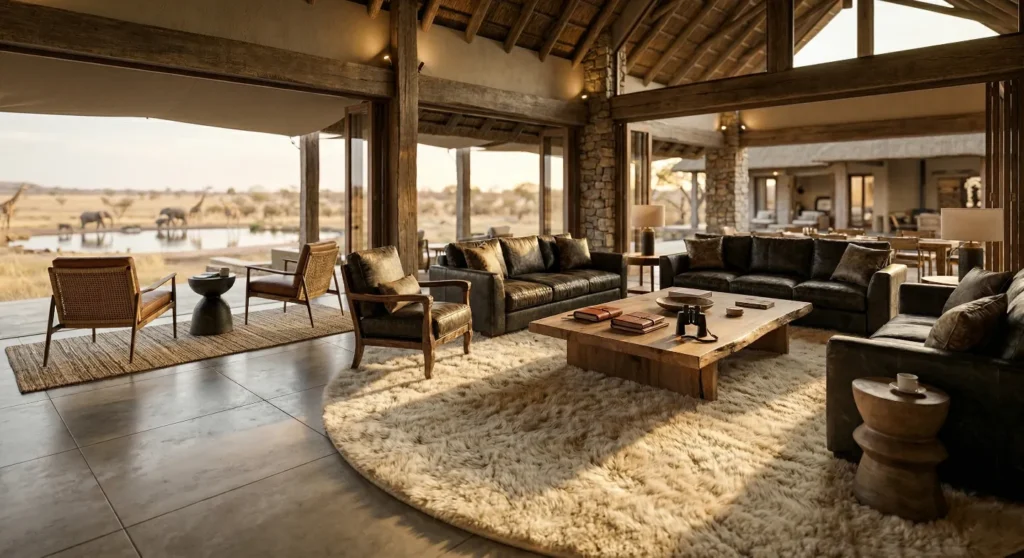
For safari lodges, rugs should feel grounded and natural. Think warm neutrals, sand tones, olive, charcoal, bark and tobacco hues. Texture is often more powerful than loud pattern in these spaces. The goal is not to compete with the landscape, but to complement it.
For boutique hotels in urban or coastal settings, a more polished contrast may work beautifully. Contemporary architecture can benefit from softening through rugs with subtle geometric detail, tonal depth or artisanal texture. These interiors often call for pieces that feel refined without becoming overly formal.
For luxury retreats and wellness-led spaces, calmness is key. Soft underfoot finishes, gentle earthy tones and serene materials can help create an environment that feels restorative and inviting. Here, rugs should contribute to a slower, quieter mood.
The Best Rug Types for Lodge and Retreat Interiors
Different spaces require different rug constructions, and hospitality projects benefit from choosing style and practicality together.
Flatweave rugs work especially well in casual-luxury spaces, covered patios, relaxed lounges and transitional areas. They are visually lighter and can suit interiors where the styling needs to feel natural and effortless.
Handwoven rugs are ideal for properties that want warmth, authenticity and craftsmanship. Their artisanal character works beautifully in safari lodges, boutique guesthouses and interiors that celebrate texture and story.
Hand-tufted rugs bring softness, density and a more plush underfoot feel. They are an excellent choice for bedrooms, private suites and premium lounge spaces where comfort is part of the luxury offering.
Natural fibre rugs such as sisal, jute, seagrass, coir and hemp are particularly strong in lodge and retreat environments. Their organic character pairs beautifully with natural palettes and layered architectural materials. You can explore options here: Organic Fibre Rugs.
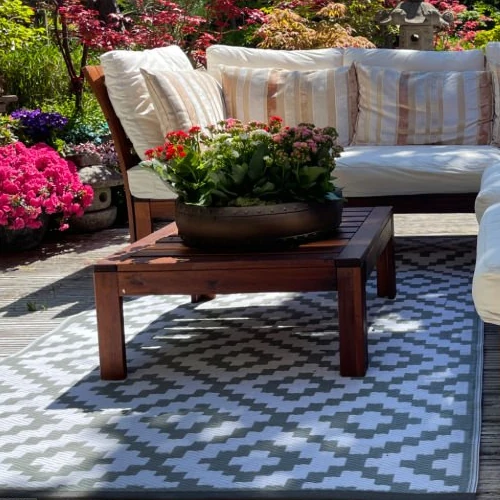
Outdoor rugs are ideal for covered decks, verandas, poolside lounges and indoor-outdoor hospitality zones. They help create continuity between the interior and exterior while offering a more practical solution for open-air spaces. Browse styles here: Outdoor Rugs.
Styling by Space
Entrance and Reception Areas
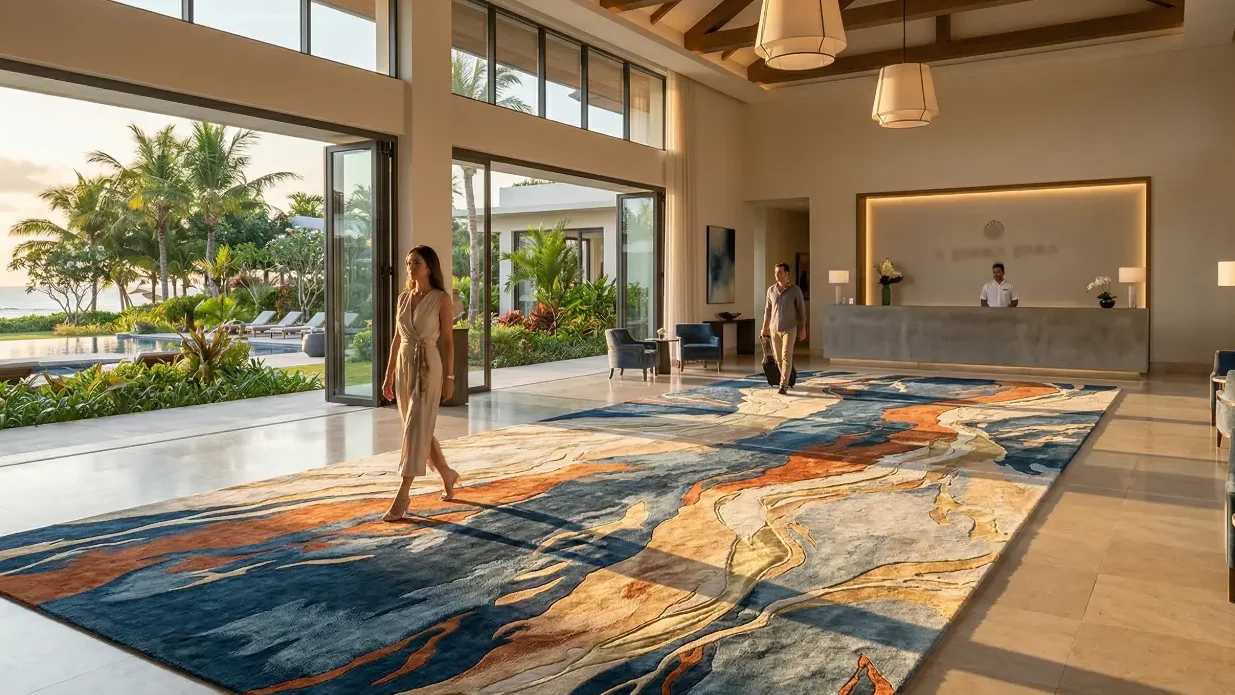
First impressions matter. In reception spaces, an oversized rug can immediately create a more welcoming, premium atmosphere. It helps establish scale, soften hard flooring and visually frame the arrival zone.
For narrower entrances or passageways, a runner can gently guide movement while adding elegance and warmth. This is especially effective in boutique hotels where circulation spaces should feel considered rather than forgotten.
Guest Suites and Bedrooms
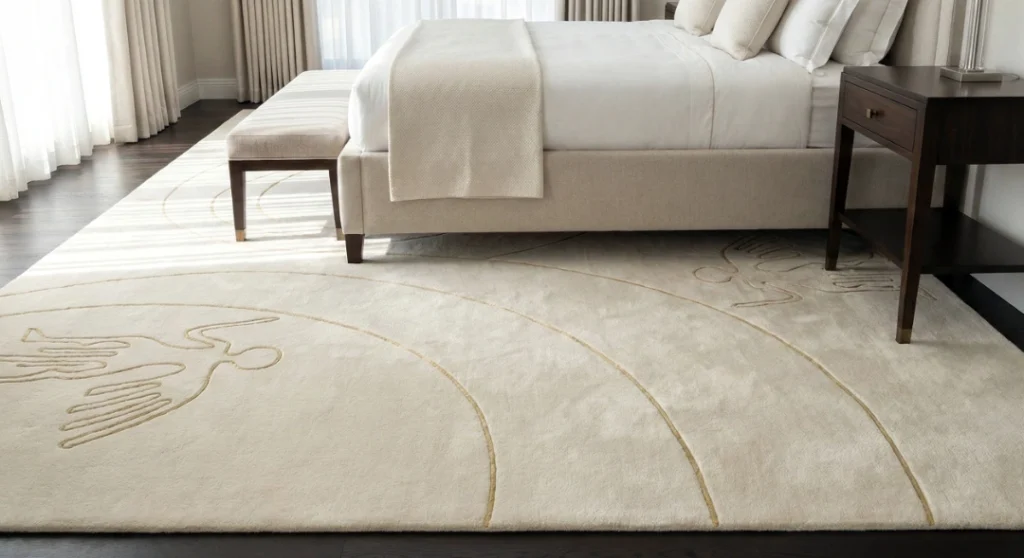
Bedrooms are one of the most important spaces to style well because guests experience them privately and physically. A rug under or around the bed creates softness on waking and helps the room feel complete.
Large suites often benefit from oversized rugs that extend the visual footprint of the bed and adjacent seating area. In smaller rooms, runners on either side of the bed can still deliver comfort and refinement without overcrowding the space.
If you need help determining the right scale, this internal guide is worth linking to naturally within the post: Rug Size Guide South Africa
Lounges and Shared Seating Areas
Open-plan lounges can quickly feel disconnected if the furniture appears to float. Rugs are one of the simplest ways to anchor a seating arrangement and create a stronger sense of intimacy.
In safari lodge lounges, textured handwoven or natural fibre rugs can add warmth without feeling too polished. In boutique hotel lounges, hand-tufted or subtly patterned rugs can help elevate a more contemporary setting.
Dining Areas
Dining areas require a more careful balance between beauty and practicality. In quieter luxury settings, rugs can work extremely well under dining tables, especially when the goal is to create a softer, more residential feel. Lower-pile constructions or more forgiving textures are often the best option here.
For restaurants or very high-turnover dining zones, practicality may outweigh the styling benefits, so rug placement should be considered case by case.
Spa and Wellness Rooms
In treatment rooms, yoga spaces or wellness suites, rugs help establish calm. These interiors benefit from muted colour palettes, tactile finishes and uncluttered styling. The rug should support the atmosphere rather than dominate it.
Covered Outdoor Areas
A covered outdoor seating space can feel far more luxurious with the addition of the right rug. It creates visual continuity, defines furniture layouts and helps transform a deck or veranda into a true hospitality destination rather than a leftover exterior zone.
Colour Palettes That Work Beautifully
The most successful hospitality palettes often feel layered and place-sensitive.
For safari and bush settings, warm beige, stone, bark, olive, charcoal and muted clay work exceptionally well. These colours feel rooted in the landscape and allow natural views to remain the hero.
For coastal or retreat-led interiors, warm ivory, driftwood, soft sage, misty grey and sandy taupe help create a lighter, calmer mood.
For boutique luxury settings, deeper accents such as forest green, blackened bronze, terracotta or muted gold details can add richness without overwhelming the scheme.
The key is to keep the palette cohesive. A rug should strengthen the design story, not interrupt it.
Pattern and Texture: The Right Balance
In hospitality interiors, texture often outperforms excessive pattern. This is particularly true in scenic locations such as safari lodges, where the surrounding environment already provides strong visual interest.
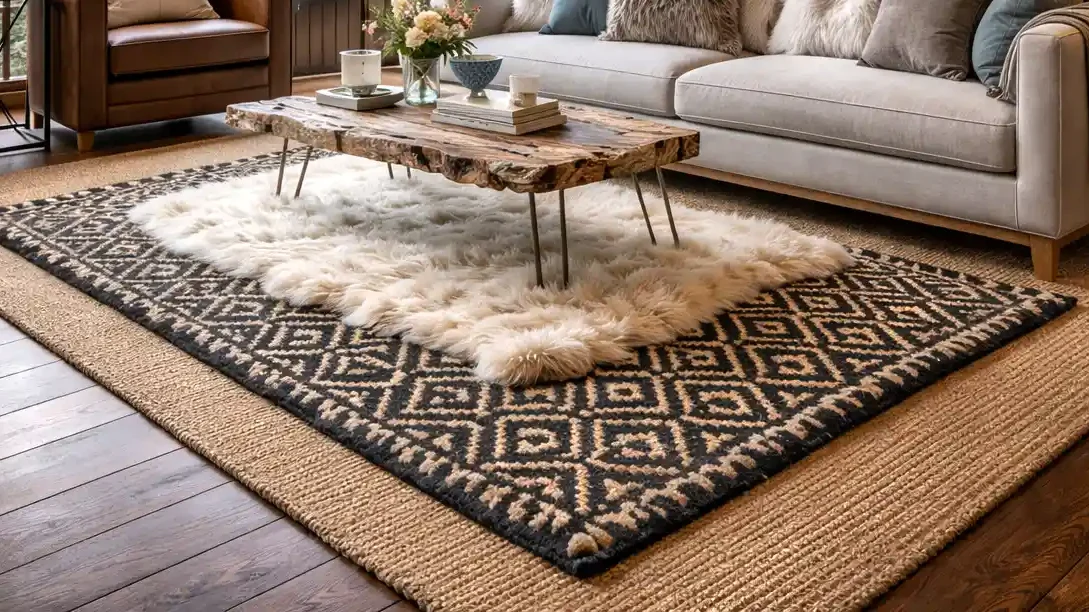
Subtle geometric motifs, tonal variation and rich woven texture can add enough depth without making the room feel busy. If upholstery, artwork and architectural details are already expressive, a quieter rug will often feel more elegant. If the room is more restrained, the rug can take on a stronger design role.
Practical Considerations for Commercial Spaces
Hospitality projects should always consider long-term use, not just initial visual impact.
Foot traffic is one of the first factors to assess. Public areas such as receptions and passageways need different solutions from private suites or occasional-use lounges.
Maintenance is equally important. Textures and patterns that disguise everyday wear can be very useful in busy environments. Material selection should also reflect the property’s location. Coastal humidity, bush dust and indoor-outdoor circulation all influence what will perform best over time.
Custom sizing is another major advantage in hospitality design. Standard sizes can look underscaled in large suites, generous lounges or unusually proportioned rooms. A custom rug allows the design to feel resolved and intentional. For projects that require a more tailored finish, you can naturally link to Made to Order
Why Handmade and Custom Rugs Work So Well in Luxury Hospitality
Luxury hospitality should not feel generic. Guests remember spaces that feel distinctive, layered and thoughtfully composed. Handmade and custom rugs help create that sense of individuality.
They allow designers and property owners to choose the right scale, tone, texture and construction for each room rather than compromising around stock sizes or generic finishes. They also contribute to a more considered design narrative, especially in properties that want to express craftsmanship, locality and understated luxury.
For projects that want a faster design-led option, it also makes sense to reference Signature Rugs as part of the journey.
South African Hospitality Styling Notes
One of the most powerful opportunities in South African hospitality is to create interiors that feel rooted in place without becoming predictable. The most elegant lodge and retreat interiors do not rely on clichés. Instead, they use tone, texture, materiality and craftsmanship to reflect the environment in a sophisticated way.
Natural fibres, layered neutrals, handwoven finishes and custom rugs can all support this beautifully. When done well, the result feels calm, elevated and memorable — exactly what luxury hospitality should deliver.
Conclusion
The best rugs for safari lodges, boutique hotels and luxury retreats do far more than fill floor space. They bring warmth, define rooms, improve comfort and help create a stronger guest experience from arrival to departure.
Whether you are styling a lodge lounge, a boutique hotel suite, a wellness retreat or a covered outdoor deck, the right rug can transform a space from attractive to unforgettable. In commercial hospitality interiors, that difference matters.
For tailored guidance on sizing, styling and custom solutions, you can direct readers to Free Consultation.
Frequently Asked Questions
What type of rug works best for a safari lodge?
Natural fibre rugs, handwoven rugs and hand tufted neutral designs often work best in safari lodges. They feel grounded, warm and well suited to nature-led interiors.
Are rugs practical for high-traffic hospitality spaces?
Yes, provided the correct material and construction are chosen. Public-facing areas usually need more durable, lower-maintenance options than private guest suites.
Can boutique hotels use custom-sized rugs?
Yes. Custom-sized rugs are often one of the best ways to make hospitality interiors feel intentional, especially in large rooms or unusual layouts where standard sizes look too small.
Are outdoor rugs suitable for luxury retreats?
Yes. Outdoor rugs are an excellent choice for covered patios, decks and indoor-outdoor hospitality spaces where comfort and design continuity are important.