Why Your Room Feels “Off”: 5 Common Rug Mistakes Devaluing South African Interiors
Introduction: The “Uncanny Valley” of Interiors
Have you ever walked into a room that should feel expensive—beautiful furniture, great natural light, a clean palette—yet something feels cold, cluttered, or unfinished?
That “uncanny valley” sensation is more common than most homeowners realise. And in South African homes—especially open-plan spaces with tiled floors, polished concrete, or large-format porcelain—the culprit is often not your sofa, your paint colour, or your décor.
It’s the floor.
A rug is not a finishing touch. It’s the anchor. It defines zones, softens acoustics, adds warmth in winter, and quietly tells the eye where the “room” begins and ends. When it’s wrong, everything above it looks less intentional—no matter how premium your furniture is.
Below are five rug mistakes that subtly devalue a space, plus practical 2026-friendly fixes aligned with the shift toward Quiet Luxury, texture-first styling, and warmer, more liveable interiors.
Mistake #1: The “Postage Stamp” Effect (Size Matters)
The problem
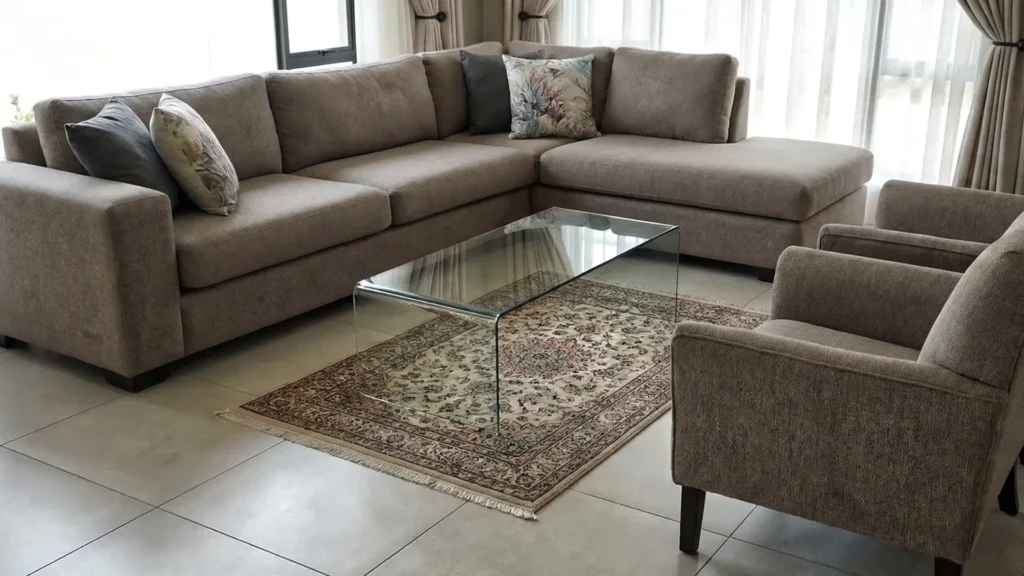
This is the classic South African open-plan error: placing a standard 1.6m × 2.3m rug in a large lounge and letting it float under the coffee table—touching nothing else.
The result?
- The room feels smaller
- The furniture looks disconnected
- The layout feels “bitty” rather than designed
- The rug looks like an afterthought, not an investment
The fix: “Front legs on”
A rug should create a zone, not a spot. The simplest rule that immediately elevates a room is:
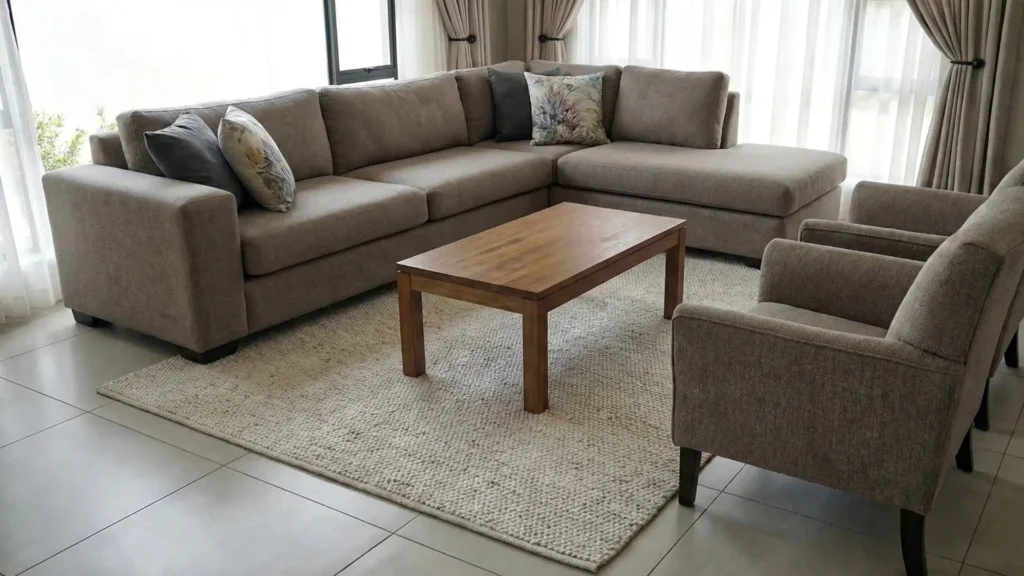
Your rug must be large enough for the front legs of your sofa and armchairs to sit on it.
This instantly “locks” the seating arrangement together and makes the room feel considered, cohesive, and more premium.
Mistake #2: “Floating” Furniture (Anchoring the Layout)
The problem
You buy a beautiful rug… and then place it only under the coffee table, leaving a moat of cold tile between the sofa and the rug.
This creates visual separation and literal discomfort—especially in winter when tiled floors make a room feel hard and echoey.
In 2026, interiors are moving away from cold minimalism. The direction is warmth, softness, and sanctuary, even in modern homes.
The fix: Treat the rug like the foundation
Your rug is the base layer of the room. If you have an oversized space (common in SA homes), you have two strong options:
- Go larger than you think (made-to-measure is often the most cost-effective “luxury move” long-term)
- Layer rugs to bridge distance and create depth (especially effective on large tiles or concrete)
Layering also allows you to mix textures—natural fibre + wool, or a low-pile base + a plush feature layer—without forcing one expensive rug to do everything.
Mistake #3: The “Matchy-Matchy” Trap (Texture vs Colour)
The problem
Trying to match your rug colour exactly to your scatter cushions or curtains can unintentionally make your room feel dated and catalogue-like.
Exact colour-matching often removes depth. It also makes the rug feel like décor—rather than a material choice that grounds the home.
The fix: 2026 is texture-first
Instead of matching colours, match the vibe.
Think in materials and contrast:
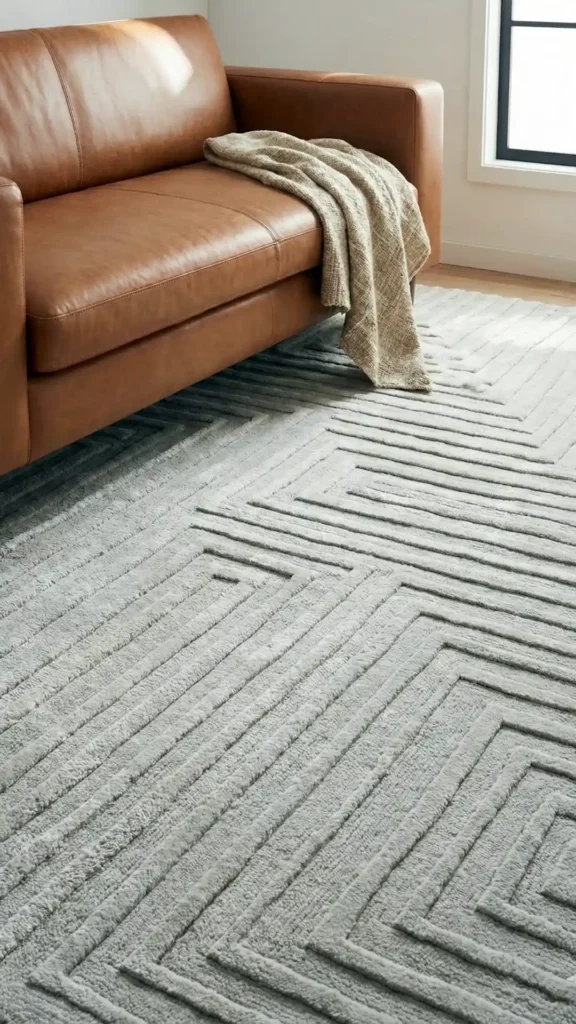
- Smooth leather sofa → chunky hand-knotted wool or a textured loop-pile
- Velvet sofa → natural sisal or a structured flatweave
- Minimal modern palette → tonal layers (stone, oatmeal, warm greige) with texture variation
- Neutral room → one statement floor (pattern, weave, or bold texture) rather than statement cushions
This is how “Quiet Luxury” reads: not loud colour, but deliberate materials.
Mistake #4: Ignoring the Indoor-Outdoor Flow (Practicality in SA Homes)
The problem
South African living is wonderfully indoor-outdoor—stacking doors, patios, gardens, braai areas, pool traffic, sea air, Highveld dust.
But many people still place delicate rugs (especially viscose) in high-traffic rooms that open directly to the outdoors. The rug then takes the full impact of:
- Red dust and fine grit
- Mud and damp footprints
- Sun exposure and fading
- Humidity (coastal homes)
The fix: Choose performance materials where life happens
If the room connects to the outdoors, choose a rug that can handle real life while still looking refined:
- High-quality polypropylene (especially modern blends that mimic wool)
- Performance flatweaves
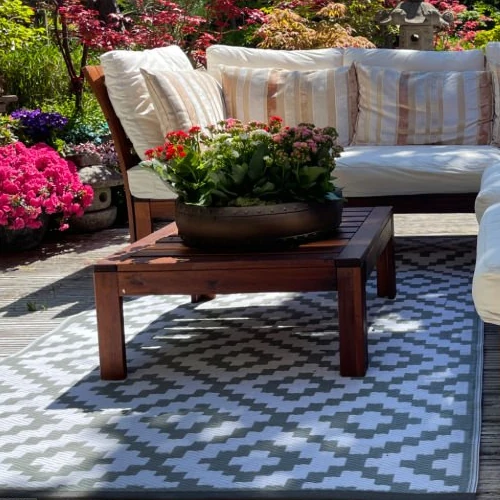
- Outdoor rugs rated for UV + moisture
This doesn’t mean “cheap-looking.” It means selecting the right tool for the job—so the rug stays beautiful.
Internal links (care + prevention):
https://www.wovenbliss.co.za/outdoor-rug-care/
https://www.wovenbliss.co.za/viscose-rug-care/
Mistake #5: Neglecting the “Landing Pad” (Bedroom Comfort + Acoustics)
The problem
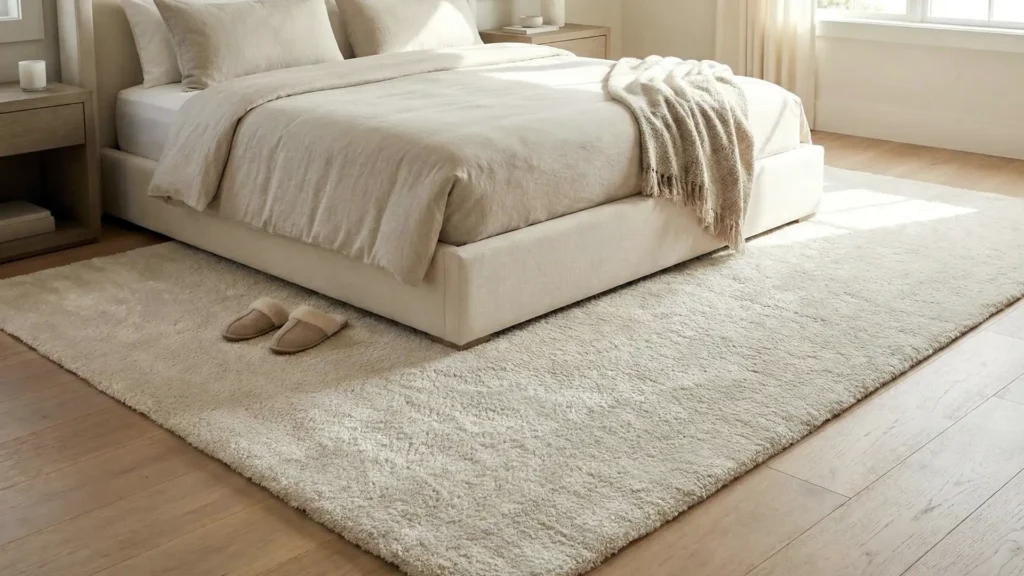
In bedrooms, the most common error is pushing the rug too far down the bed—or choosing a rug that’s too small. You step out onto cold tile or timber, and the room loses that “sanctuary” feeling instantly.
It also affects acoustics: undersized rugs do very little to soften sound, especially in large master suites.
The fix: Build the sanctuary with an oversized “Landing Pad”
The 2026 bedroom direction is comfort-forward—soft, warm, calming, and quietly indulgent (think “Cloud Dancer” softness without sterile white).
A practical rule that works beautifully:
Choose an oversized rug that extends at least 60cm on both sides of the bed.
If space allows, extend generously at the foot of the bed too—this is where luxury is most visible.
Bonus: Rug Under Dining Table Rules (Quick, High-Impact)
If you’re updating an open-plan space, dining rugs are a fast upgrade—if sized correctly.
Rule: the rug must be large enough that chairs stay on the rug even when pulled out.
If the chair legs catch the edge, it feels awkward and looks undersized.
Conclusion: A Rug Is an Investment—Don’t Let a Sizing Error Devalue It
A well-chosen rug doesn’t just decorate a room—it increases comfort, improves acoustics, creates warmth, and makes the entire space feel more intentional.
If your home feels “off,” there’s a strong chance it’s not your furniture. It’s your foundation layer.
Next step
Ready to fix your floor plan?
- Browse our Custom Made-to-Measure rug options (ideal for open-plan South African homes)
- Or contact Woven Bliss for a virtual consultation—we’ll help you choose a size, material, and layout that makes your space feel cohesive and elevated.
FAQ: Rug Placement Rules & Styling Fixes (South Africa)
What is the “Postage Stamp” rug effect?
The “Postage Stamp” effect happens when a rug is too small for the seating area, so it floats under the coffee table without connecting to the sofa or chairs. The room looks fragmented and less premium. The fix is to size up so at least the front legs of your main seating sit on the rug.
How big should a rug be under a lounge suite or corner couch?
Use the “front legs on” rule as a minimum: the front legs of the sofa and chairs should rest on the rug. For corner couches, ensure the rug extends under the main run of the couch and reaches past the coffee table area so the seating zone feels unified.
Should a rug go under the sofa, or only under the coffee table?
In most open-plan South African homes, placing a rug only under the coffee table creates “floating” furniture and a cold strip of tile between the sofa and rug. For a cohesive look, the rug should sit under the front legs of the sofa at minimum, and ideally extend far enough to visually anchor the full seating arrangement.
Is layering rugs a good idea on tiled or concrete floors?
Yes—layering is an excellent way to add warmth and texture to hard floors. A large natural-fibre base (like sisal or seagrass) can define the zone, while a softer wool or textured rug on top adds comfort. Layering also helps in oversized rooms where one rug alone may not bridge the space.
How do I avoid a “matchy-matchy” look with rugs and cushions?
Avoid trying to match colours exactly. A more elevated 2026 approach is “texture-first”: pair contrasting materials (like leather with chunky wool, or velvet with natural fibre) and keep colours in the same family rather than identical. This creates depth and a more designer-led feel.
What are the best rug materials for homes that open onto patios and gardens?
Choose performance-focused materials that handle real South African living—especially dust, sun, and damp footprints. High-quality polypropylene rugs (that mimic wool), durable flatweaves, and outdoor-rated rugs are ideal for indoor-outdoor flow and are far easier to maintain than delicate fibres.
Should I avoid viscose rugs in high-traffic areas?
In many cases, yes. Viscose is beautiful but more sensitive to moisture, staining, and wear—so it’s better suited to low-traffic, dry areas. If your room connects to outdoors or sees heavy foot traffic, a performance rug or wool blend will typically be a safer long-term choice.
How far should a bedroom rug extend on the sides of the bed?
For a true “landing pad” feel, aim for at least 60cm of rug showing on each side of the bed so your feet land on warmth when you get up. If possible, allow generous extension at the foot of the bed too—this is where a master suite looks most luxurious.
What size rug should I use under a dining table?
The rug should be large enough that chairs remain on the rug even when pulled out. A practical guideline is to allow an extra 60–75cm beyond the table edge on all sides, depending on chair size and how far they slide back.
Can I use a rug to make an open-plan room feel warmer in winter?
Absolutely. Rugs reduce the visual and physical “coldness” of tile and concrete, improve acoustics, and help define cosy zones. For winter comfort, consider thicker textures (wool, high-pile, or layered rugs) and pair with quality underlay for added insulation.