Mixing Patterns and Textures Successfully: A Guide to Layering Home Décor
When you walk into a flawlessly executed room, the success of the design often lies in an invisible balance: the masterful mixing of patterns and textures. In high-end interior design, layering these elements is not about piling on fabrics and prints—it is a calculated architectural technique that brings depth, character, and “Quiet Opulence” to your home.
If you want to combine textures and patterns without creating visual chaos, the secret lies in scale, intentional contrast, and a grounded foundation. Here is how to master the art of layering to create a resolved and sophisticated South African home.
The Foundation of Mixing Patterns
1. Anchor with a Neutral Base Consider neutrals as your architectural canvas. Before introducing bold patterns, anchor the space with foundational elements in soft, versatile shades like warm travertine, plaster, taupe, or charcoal. A neutral sofa or a large, unpatterned flatwoven rug creates a calming backdrop, allowing your chosen patterns to stand out without overwhelming the room.
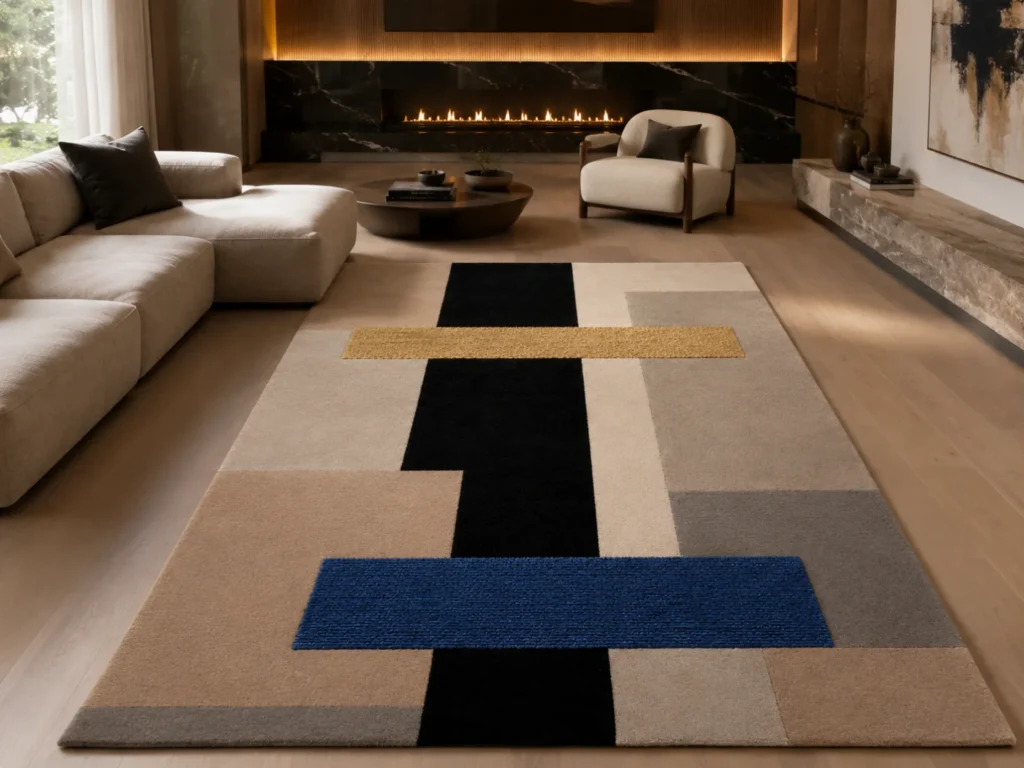
2. Specify a “Hero” Pattern Every curated room requires a focal point. Let your hero pattern dictate the room’s energy. This could be a bespoke hand-tufted rug featuring striking Art Deco geometry or vibrant Ndebele-inspired motifs. Because a statement rug grounds the entire seating arrangement, it easily sets the tone for the rest of the space.
3. Layer Supporting Patterns Once your hero piece is in place, introduce secondary patterns that complement rather than compete. If your main rug features a large-scale, bold design, mix in smaller-scale patterns elsewhere—such as subtle pinstripes on an armchair or a fine herringbone weave in your throw blankets. Mixing scales ensures the eye moves smoothly around the room.
4. Maintain a Cohesive Palette Mixing patterns is effortless when your colour palette is tightly controlled. Stick to a curated selection of earthy luxury tones—such as warm terracotta, rich ochre, deep sapphire, and grounded browns. Limiting your primary palette to two or three shades keeps the layering feeling intentional rather than accidental.
5. Provide Visual Breathing Space Even the most beautiful patterns require space to breathe. Solid blocks of colour act as visual rests. Solid-coloured linen cushions, structural bouclé armchairs, or heavy velvet drapes allow your hero patterns to shine without clashing.
Playing with Texture to Add Depth
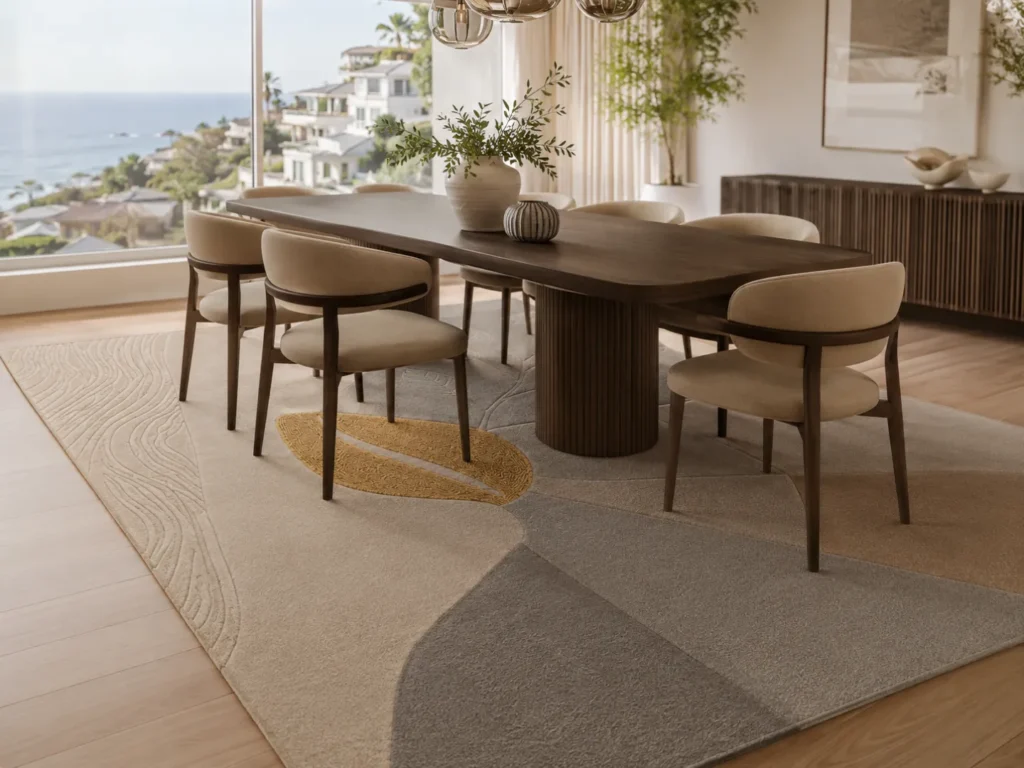
1. Mix Soft and Hard Surfaces A room lacking texture feels flat, regardless of its colour. Combining deeply soft fabrics with rigid architectural surfaces adds necessary tension and balance. Imagine the plush, acoustic-dampening cut pile of a New Zealand Merino wool rug resting against a polished concrete floor or a raw timber coffee table.
2. Contrast Matte and Luminous Finishes At Woven Bliss, one of our signature techniques for adding depth to a bespoke rug is contrasting matte wool with luminous bamboo silk. You can apply this same principle throughout the room: pair a matte linen sofa with glossy ceramic lamps, or a rustic timber dining table with custom polished brass hardware.
3. Introduce Organic Materials Nature offers the most compelling textures. Introduce depth through woven sisal, raw stone, unglazed ceramics, and rich wood grains. A handwoven organic fibre rug, crafted by our nationwide network of skilled artisans, instantly introduces a grounded, tactile element that balances sleeker, modern furniture.
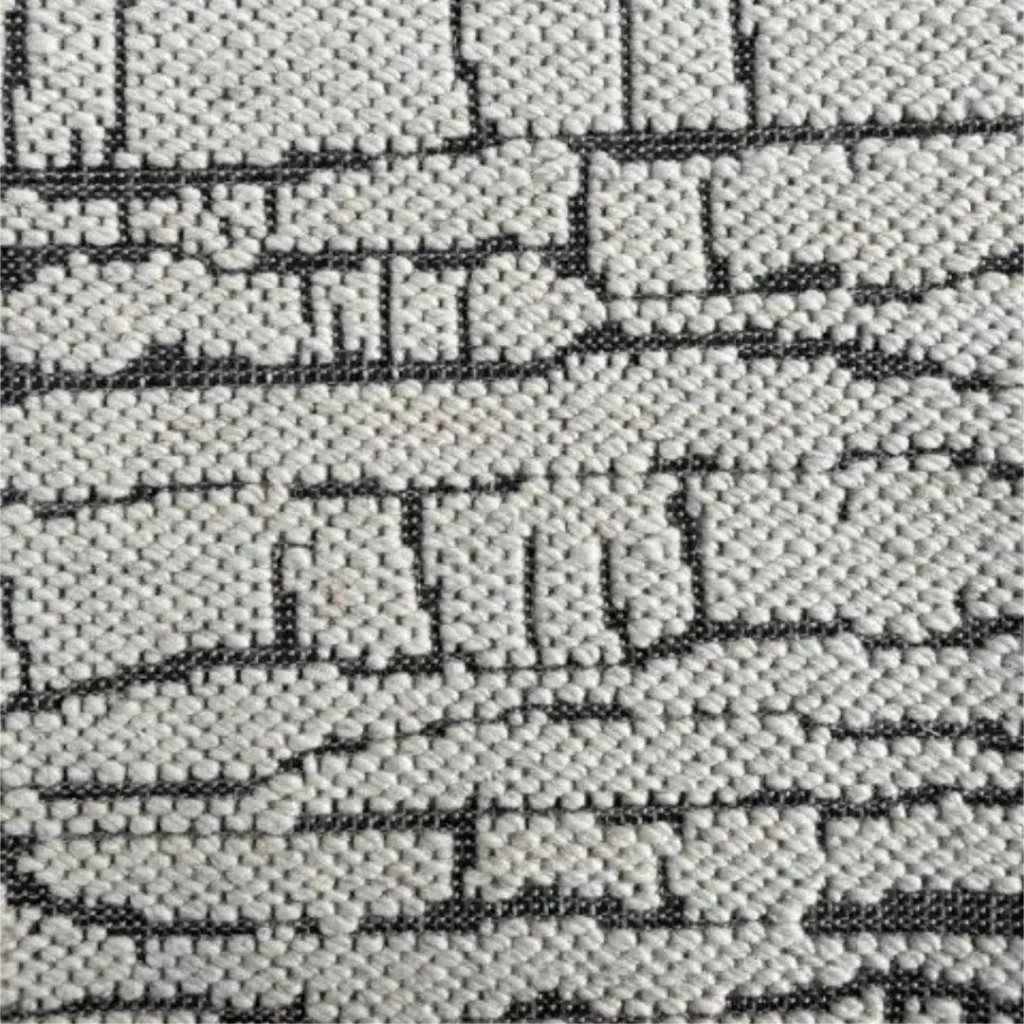
Easy Ways to Style with Patterns and Textures
1. The Rug Layering Technique Rugs are the ultimate tool for introducing both pattern and texture. For a deeply curated look, employ the layering technique: place a smaller, boldly patterned hand-tufted rug over a larger, highly textured natural jute or wool flatweave. This adds immediate architectural dimension to a living room or master suite.
2. Cushions and Throws: Low-Commitment Layering For an effortless update, mix textures on your seating. Pair a structured, geometric-patterned cushion with a solid, heavy-weight linen or velvet throw. Ensure the colours tie back into the hues found in your statement rug.
3. Textured Statement Furniture A single piece of textured furniture—like a ribbed timber console, a tufted leather ottoman, or a rattan accent chair—elevates a room instantly. Contrast is key: if your primary sofa is sleek and smooth, ensure your accent chairs bring a heavy, tactile weave to the arrangement.
4. Dimensional Window Treatments Curtains do more than frame a view; they are vertical texture. Layering sheer, airy linens with heavy, solid-colour velvet drapes provides a sophisticated, hotel-like luxury that softens the hard edges of window frames.
Final Thoughts
Mixing patterns and textures is the hallmark of confident, elevated design. By grounding your space with high-quality, tactile materials and balancing bold geometric patterns with visual breathing space, you can transform any room into a layered masterpiece.
Start from the floor up. Explore our Custom-Rugs rug services or book a Free Consultation with Woven Bliss to commission a bespoke piece that perfectly anchors your textured, patterned interior.
check out https://www.decorilla.com/online-decorating/mixing-patterns