The Art of Layering Rugs: A Masterclass in Texture and Proportion
In high-end interior design, the floor is never just a surface—it is the foundational canvas of the room. While a single, perfectly proportioned rug can anchor a space, the technique of layering rugs introduces a level of architectural depth, tactile richness, and curated sophistication that a solitary piece rarely achieves.
Far from a fleeting “hot new trend,” rug layering is a definitive strategy for achieving that highly sought-after “Quiet Opulence.” It allows you to build a room’s aesthetic from the ground up, marrying the grounding properties of organic fibres with the plush indulgence of luxury statement pieces.
Whether you are designing an expansive, open-plan South African home or a refined boutique hospitality suite, here is how to master the art of layering rugs.
Why Layering Rugs is a Designer’s Secret Weapon
1. Defining Open-Concept Spaces In large, fluid living areas, a single rug can sometimes feel lost or disconnected. Layering allows you to create distinct “zones”—such as a formal seating area or an intimate reading nook—without needing physical walls.
2. Acoustic and Thermal Comfort Modern homes often feature hard surfaces like polished concrete, tile, or hardwood. Layering rugs provides double the acoustic dampening, absorbing echoing footsteps and ambient noise while adding significant thermal insulation during colder months.
3. The Protection of Heirloom Pieces If you have commissioned a delicate, high-value statement piece—such as a hand-knotted Nepalese rug or an intricate bamboo silk design—placing it over a larger, highly durable organic flatweave protects the edges and underside of the premium rug from heavy foot traffic and hard floor friction.
How to Layer Rugs Like a Professional
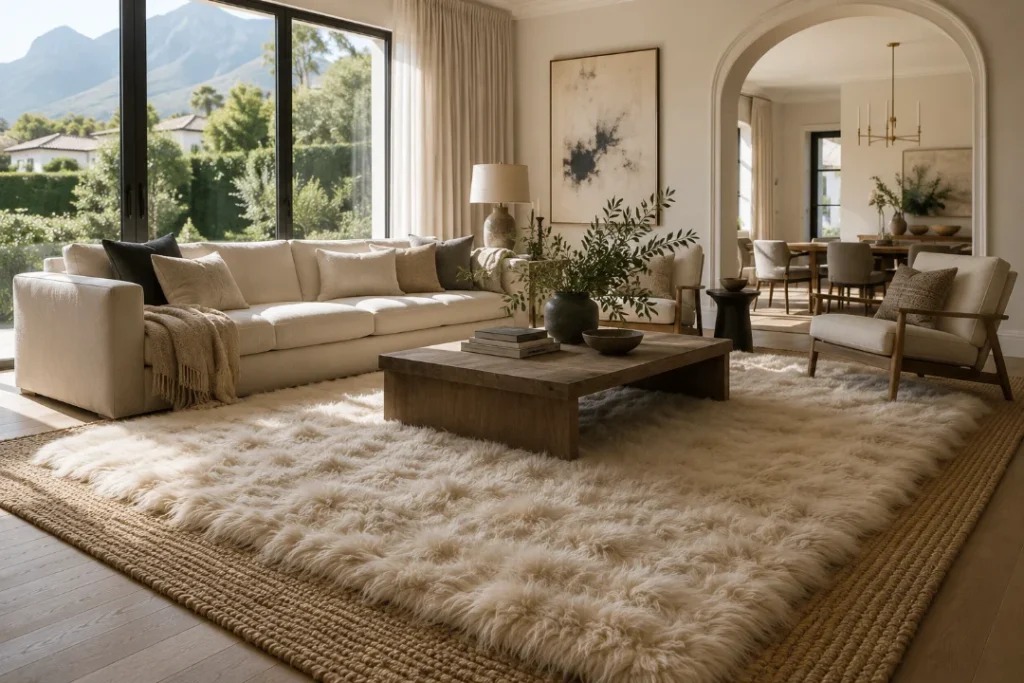
Step 1: Lay the Foundation The base rug must act as a neutral, grounding frame. It should be oversized—large enough that all major furniture pieces can sit comfortably upon it. We recommend using either a natural fibre rug or handwoven organic flatweave, crafted by our network of skilled artisans across South Africa. Natural, textural materials like jute, sisal, or coarse wool in warm, earthy tones provide a resilient and structurally sound base.
Step 2: Introduce the Statement Piece This is where you inject personality and luxury. The top layer should be noticeably smaller to allow a generous border (usually 30 to 60 cm) of the base rug to show. This is the perfect placement for a bespoke, hand-tufted rug crafted by our specialist partners in Johannesburg. Consider bold Art Deco geometry, vibrant Ndebele-inspired patterns, or deep, saturated colours like emerald green and warm terracotta.
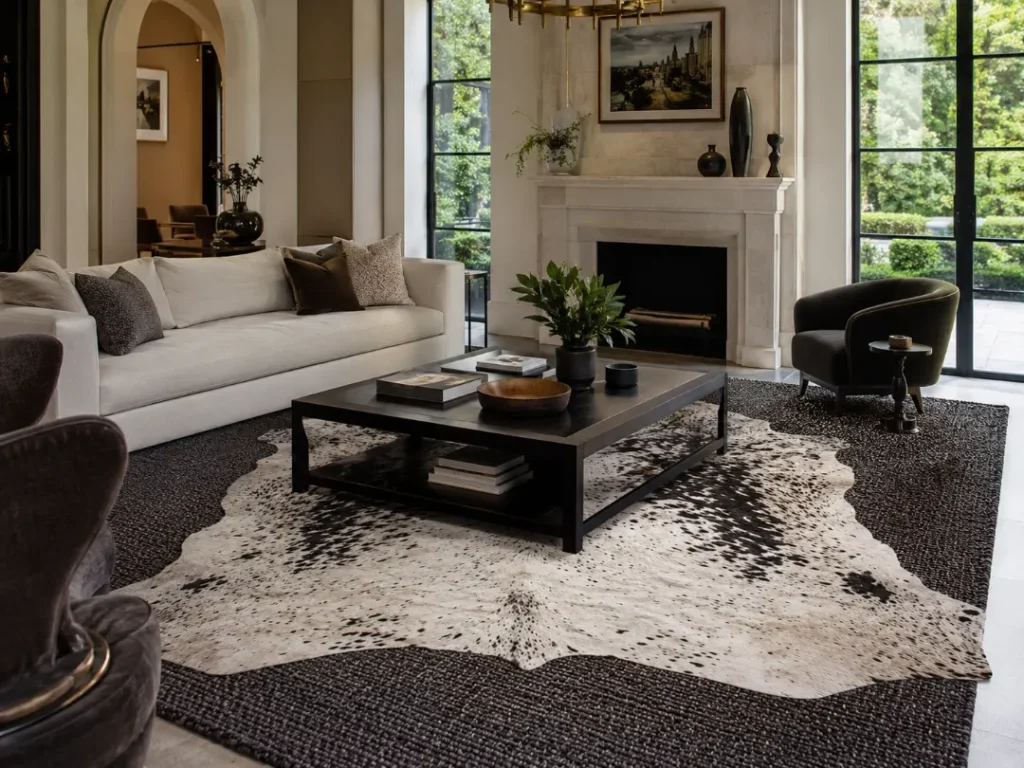
Step 3: Exploit Textural Contrast Successful layering relies on contrast. If your base is a coarse, organic flatweave, your top layer should be indulgent. The visual push-and-pull between a grounded, matte base and the high-sheen, plush finish of New Zealand Merino wool and hand-carved bamboo silk is what makes a room feel expertly designed.
Step 4: Lock in the Proportions Proportion is critical. If the top rug is too small, it looks like a bathmat floating in the room; if it is too large, the layering effect is entirely lost. Because standard retail sizes rarely accommodate perfect layering, specifying made-to-measure dimensions for both the base and the statement layer ensures a flawless architectural fit.
Top Layering Applications for Different Rooms
- The Living Room: Anchor your main seating arrangement with a massive, neutral flatweave. Then, layer an asymmetrical or boldly patterned cut-pile rug right in the centre, placing your coffee table directly over it to create a stunning focal point.
- The Bedroom Suite: Instead of one massive rug under the bed, place a structured base rug down first, and then layer a softer, plush runner or a uniquely shaped accent rug at the foot or sides of the bed. This provides targeted warmth right where your feet hit the floor in the morning.
- The Modern Safari Lounge: To achieve a refined Modern Safari aesthetic, lay down a warm brown or sand-toned woven base, and top it with a deeply textured organic fibre rug or a stylized, geometric accent piece that pulls in colours from the surrounding landscape.
Common Layering Mistakes to Avoid
- Overcrowding: Stick to two rugs. Adding a third usually results in visual clutter and a tripping hazard.
- Ignoring Thickness: The base rug must be relatively flat (low pile). If you use a thick, plush rug as a base, the top rug will buckle, shift, and look sloppy, and your furniture will not sit level.
- Clashing Patterns: If your top rug features a loud, bold pattern, ensure the base rug is entirely solid or features only a very subtle, tonal weave.
Final Thoughts
Layering rugs is an elevated design technique that transforms a room from merely furnished to deeply curated. By combining the rugged, tactile beauty of organic flatweaves with the plush luxury of bespoke, hand-tufted statement pieces, you can create a floor-scape that is uniquely yours.
Don’t let standard sizing limit your vision. Explore our Custom Rugs rug services or book a Free Consultation with Woven Bliss to commission the perfect layered pairing for your home.
Frequently Asked Questions
Expert advice on selecting the right textures, sizes, and combinations for a perfectly layered floor.
What type of rug works best as a base layer?
The best base layers are flatwoven rugs made from durable, organic fibres such as jute, sisal, or tightly woven wool. They should have a very low pile height so the top rug can lie flat without buckling or creating a tripping hazard.
How much of the base rug should be visible?
As a general rule in interior design, you should aim to leave a visible border of 30 to 60 centimetres of the base rug exposed on all sides. This frames the top rug perfectly and ensures the layered effect looks intentional rather than accidental.
Can I layer rugs on top of wall-to-wall carpeting?
Yes, layering an area rug over fitted carpet is a great way to define a space or add colour. However, to prevent the area rug from creeping or rippling, ensure your fitted carpet is a short pile and always use a stiff, high-quality rug pad beneath the top layer.
Can I mix different patterns when layering?
While mixing patterns can look incredibly chic in eclectic spaces, the safest and most sophisticated approach is to pair a bold, geometric, or vibrant statement rug with a solid, tonal, or subtly textured base rug to avoid visual chaos.