Autumn Rug Styling Ideas for South African Homes
There’s a shift that happens around this time of year that’s hard to put your finger on at first. The mornings feel a little cooler. The light sits differently in the afternoon. You start reaching for a cardigan you haven’t touched in months. And slowly, your home starts to feel like it needs something more — something softer, warmer, more settled.
That’s usually when a good Autumn rug makes all the difference.
Not in a dramatic, renovation kind of way. More like the way a throw blanket or a bowl of something warm changes the feel of an evening. A rug grounds a room. It pulls things together. And in autumn especially, it can make your home feel genuinely cosy without you having to change very much at all.
It’s really about layering, not decorating
Autumn in South Africa doesn’t call for a complete interior overhaul. What it does call for is a bit more depth — textures you want to touch, colours that feel settled rather than stark, surfaces that don’t echo quite so much in the cold.
Autumn Rugs do a lot of that work quietly. The right one can make a living room feel anchored, a bedroom feel like a proper retreat, and a hallway feel like it belongs to the rest of the house. The wrong one — or no rug at all — can leave a space feeling unfinished in a way that’s hard to explain but easy to feel.
For autumn, it helps to lean into warmer tones. Not necessarily dark or heavy, just earthier. Creams and oatmeals. Olive greens. Soft browns and taupes. Terracotta if you’re feeling bold. Charcoal if you want something more moody and grown-up. These shades sit naturally alongside wood furniture, linen, leather, and the kinds of textures that feel right when evenings start drawing in.
What to do in each room
In the living room, size matters more than most people realise. A rug that’s too small makes a room feel oddly disconnected, like the furniture is floating. If yours is on the smaller side, autumn is a good time to size up — at least enough that the front legs of your sofa and chairs can sit on it. It changes the whole feel of the space without you having to touch anything else.
Bedrooms are where rugs really earn their keep in the colder months. There’s something about stepping out of bed onto a soft, warm surface on a chilly morning that feels quietly luxurious. A large rug placed under the bed — extending well past the sides and foot — creates that enveloping feeling. Keep the design simple and tonal. Bedrooms don’t need pattern to be beautiful.
Don’t forget the spaces in between. Hallways, passages, and entryways are easy to overlook, but they set the tone for how your home feels the moment you walk in. A runner in a warm neutral or a subtle pattern introduces rhythm and warmth to spaces that can otherwise feel a bit bare and functional.
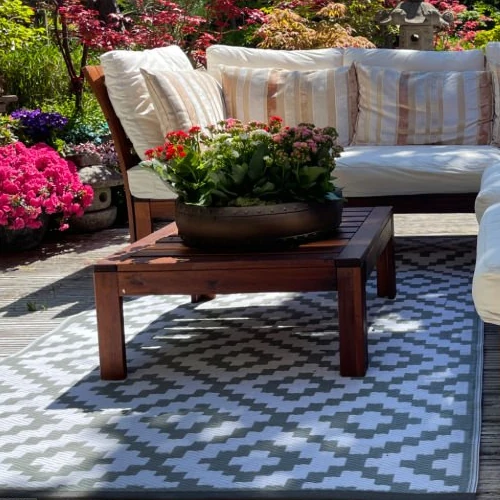
If you have a covered patio or veranda — and many South African homes do — autumn is actually a great time to make those spaces more inviting rather than abandoning them to the cooler evenings. An outdoor rug in a natural weave, paired with a throw and some lanterns, can make an alfresco area feel like a genuine extension of the interior rather than just an afterthought.
Texture is doing more work than you think
Colour is the obvious lever to pull in autumn, but texture is the one that really changes the atmosphere. A flat, smooth room can look perfectly fine but still feel a bit cold and uninviting. Add a handwoven wool rug, a boucle cushion, a ceramic vase, and a knitted throw — suddenly the same room feels like somewhere you actually want to spend time.
Natural fibre rugs — jute, sisal, seagrass — are worth considering here too. People tend to think of them as a summer thing, but they add exactly the kind of organic, grounded texture that works beautifully in autumn interiors when you pair them with warmer accessories. Olive cushions, rust-toned ceramics, darker timber — these offset the lightness of the fibre and give the room the depth it needs for the season.
Layering rugs is another option if you want to add interest without buying something entirely new. A larger, neutral base rug with a smaller, softer one placed over it can define a seating area and add a sense of intention to the room. It works best when you keep the base simple and let the top rug do the talking.
When nothing off the shelf quite fits — the case for going bespoke
There’s a particular frustration that comes with having a beautifully designed room and not being able to find a rug that works in it. The proportions are slightly unusual. The colour palette is specific. Standard sizes fall just short, or the designs available feel generic against everything you’ve carefully chosen. This is where a bespoke rug stops being a luxury and starts being the most practical solution in the room.
A custom-made autumn rug is designed around your space rather than the other way around. You choose the dimensions, the pile height, the construction, the colour — sometimes down to very precise tonal variations that would be impossible to find ready-made. For homes with open-plan living areas, unusually wide hallways, or irregularly shaped rooms, this kind of control over size alone can be transformative.
But it goes further than just fit. A bespoke rug can be designed to respond to everything else in the room — the undertones in your wall colour, the warmth of your timber floors, the specific green in a piece of artwork you love. It becomes part of the room in a way that a ready-made piece rarely does, because it was never meant for anyone else’s home.
For autumn in particular, there’s something very satisfying about commissioning a piece with the season in mind. A wool rug in a deep, considered neutral. A hand-tufted design in warm earthy layers. A flatweave in a custom colourway that bridges your living and dining spaces. These aren’t quick decisions, but they’re the kind that tend to feel completely right for years.
Bespoke runners — the most underestimated option in a home
If there’s one area where going custom makes the biggest visible difference, it’s runners. The humble runner is one of the most hardworking pieces in any home — and also one of the most difficult to buy well off the shelf.
Standard runner sizes rarely account for the real variety of South African homes. Older properties often have long, narrow passages with unusual proportions. Modern homes sometimes have wide entrance halls that a standard runner crosses without quite anchoring. Open staircases call for a specific width and length that pre-cut options simply don’t offer. A bespoke runner made to the exact dimensions of your space solves all of this immediately.
Beyond size, a custom runner gives you the chance to introduce something genuinely beautiful into a part of the home that often gets treated as an afterthought. A richly textured wool runner in a muted, earthy tone running the length of a hallway. A hand-tufted runner in warm charcoal or olive that ties the entrance to the rest of the interior. A stair runner finished with polished brass stair rods that turns a functional staircase into something you actually notice and enjoy.
These details accumulate. A well-considered runner doesn’t just warm up a cold floor — it gives a sense of intention to the whole home. It signals that the spaces in between have been thought about, not just the rooms.
In autumn especially, when the quality of light shifts and you’re spending more time moving slowly through your home rather than rushing in and out, that sense of intention matters more than usual. You notice things you walk past in summer. The right runner makes those moments feel considered rather than overlooked.
Buy for longevity, not just the season
The best autumn pieces are the ones that don’t feel desperately seasonal. A well-made rug in a warm neutral or a timeless earthy tone will carry you through winter and still feel right come spring. The same is true of a bespoke piece — perhaps even more so. When something has been made specifically for your home, it tends to belong there in a way that transcends seasons. You’re not dressing a set — you’re layering into a home that reflects how you actually live.
The most inviting autumn interiors are rarely the most styled. They’re the most considered. Warmer, more tactile, and a little more personal than the rest of the year. A good rug — whether ready-made or designed entirely around your space — is usually where that shift begins.
Rugs & Interiors
Frequently Asked Questions
Everything you need to know about choosing, styling, and commissioning rugs for South African homes this autumn.
For autumn, the most versatile rug colours are warm, earthy tones that complement South Africa’s natural landscape. Think creams and oatmeals, sand and taupe, olive green, terracotta and clay, chocolate brown, charcoal, and muted rust. These shades pair beautifully with wood furniture, linen upholstery, leather accents, and brass finishes — creating depth without feeling heavy or overly seasonal.
The most common mistake is choosing a rug that’s too small. In a living room, your rug should be large enough for at least the front legs of your sofa and chairs to sit on it. This anchors the furniture grouping and makes the room feel cohesive and intentional. When in doubt, size up — a generous rug almost always looks better than one that leaves too much bare floor around it.
Yes, and for many spaces it is the most practical option. Bespoke rugs are made to your exact specifications — size, pile height, construction, and colour — so they work with your space rather than the other way around. This is especially valuable for open-plan living areas, unusually shaped rooms, or when you need a precise colourway to tie together a carefully considered interior.
Absolutely. Standard runner sizes rarely suit the real variety of South African homes, particularly older properties with long narrow passages or modern homes with wide entrance halls. A custom runner made to your exact dimensions solves the fit issue immediately, and also gives you the opportunity to introduce something genuinely beautiful into a space that often gets overlooked. A richly textured wool runner or a hand-tufted piece in a considered earthy tone can transform the entire feel of a home’s transitional spaces.
Texture matters just as much as colour in autumn interiors. Handwoven wool rugs offer softness and natural warmth. Hand-tufted rugs provide a plush, luxurious finish with artisanal character. Flatweave rugs work well for subtle layering. Natural fibre rugs — jute, sisal, seagrass — add organic grounding and earthy depth. For bedrooms, a cut-pile or plush wool rug underfoot on cold mornings creates a sense of quiet luxury that’s hard to replicate any other way.
Yes — natural fibre rugs work beautifully in autumn when styled correctly. The key is to pair them with warmer surrounding elements: darker timber, leather accents, olive or rust cushions, woven baskets, and deeper ceramics. These accessories offset the lightness of the fibre and give the room the warmth and depth it needs for the season. Natural fibre rugs are particularly effective in dining rooms, entrances, passages, and covered patios.
Rather than abandoning your outdoor spaces as temperatures drop, use an outdoor rug to soften tiled or concrete surfaces and make the area feel like a genuine extension of the interior. Choose rugs in natural-look weaves, and tones like sand, stone, charcoal, or olive. Pair with lanterns, neutral cushions, and a throw over a chair — this layered approach creates a warm, inviting atmosphere that makes alfresco evenings feel intentional rather than makeshift.
The key to layering rugs successfully is restraint and proportion. Start with a larger, neutral base rug — natural fibre works particularly well here — then place a smaller, softer, or patterned rug over it to define a seating area or focal point. Keep the base simple so the top rug can introduce texture or depth without competing. When the scale feels intentional and the two rugs are tonally related, layering adds a sense of curation rather than clutter.
Lead times for bespoke rugs vary depending on construction method, size, and complexity of design. Hand-tufted and handwoven pieces typically require the most time due to the artisanal nature of their production. It is worth having this conversation early so your piece is ready when you need it. If you need something sooner, pre-designed handcrafted pieces — made with the same quality and care — can offer a faster route to a considered, beautiful result.
A large, plush rug placed under the bed is ideal — one that extends well past the sides and foot of the bed frame to create a generous landing area. In autumn, look for heritage hand-tufted rugs, wool rugs in warm neutrals, or softly patterned pieces in muted greens, browns, or creams. Keep the design calm and tonal rather than busy — bedrooms benefit from subtle interest rather than statement-making pattern.