5 Reasons Why Handcrafted Rugs Outshine Machine-Made Rugs
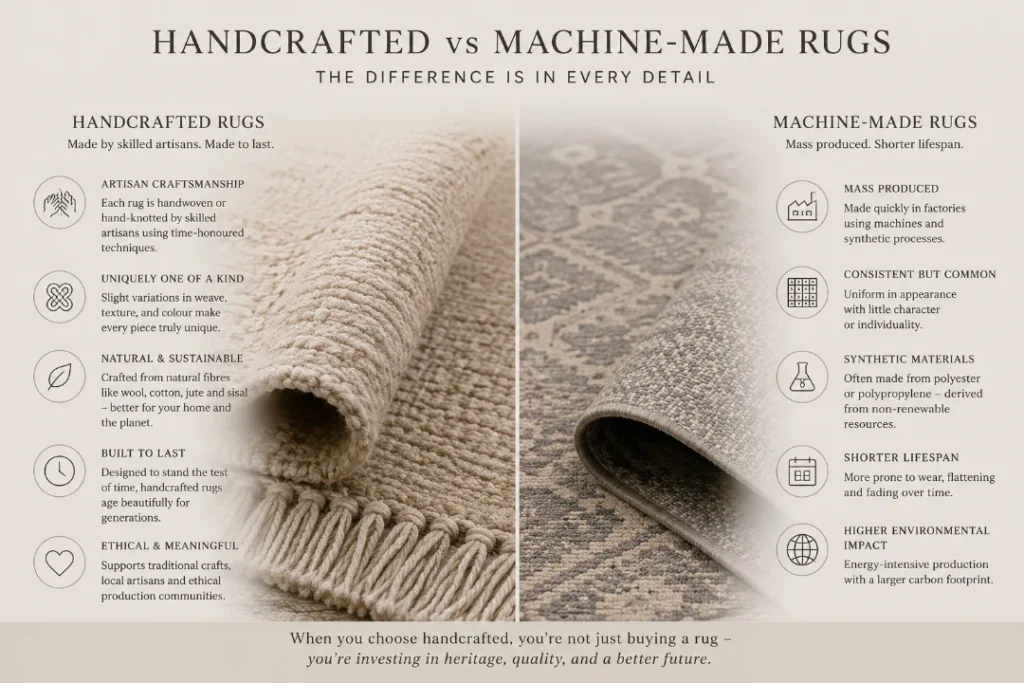
Rugs are the literal and figurative foundation of interior architecture—they define a space, influence room acoustics, and reflect an overarching design philosophy. When choosing between handcrafted and machine-made rugs, the initial focus often lands purely on immediate cost and basic pattern appeal. However, a deeper look reveals critical factors—such as architectural proportion, indoor air quality, ethical supply chains, and material resilience—that differentiate a mass-produced floor covering from a piece of true textile art.
Here are 5 definitive reasons why bespoke, handcrafted rugs remain the undisputed choice for sophisticated residential and commercial interiors.
1. Craftsmanship & Structural Integrity: The Architectural Advantage
Handcrafted Rugs: Built to Endure Across Grand Scales One of the most profound advantages of handcrafted rugs is their structural integrity, especially when scaled for expansive spaces. In historic galleries, luxury safari lodges, and grand open-plan residential builds, seamless, extra-large dimensions are required to anchor the architecture.
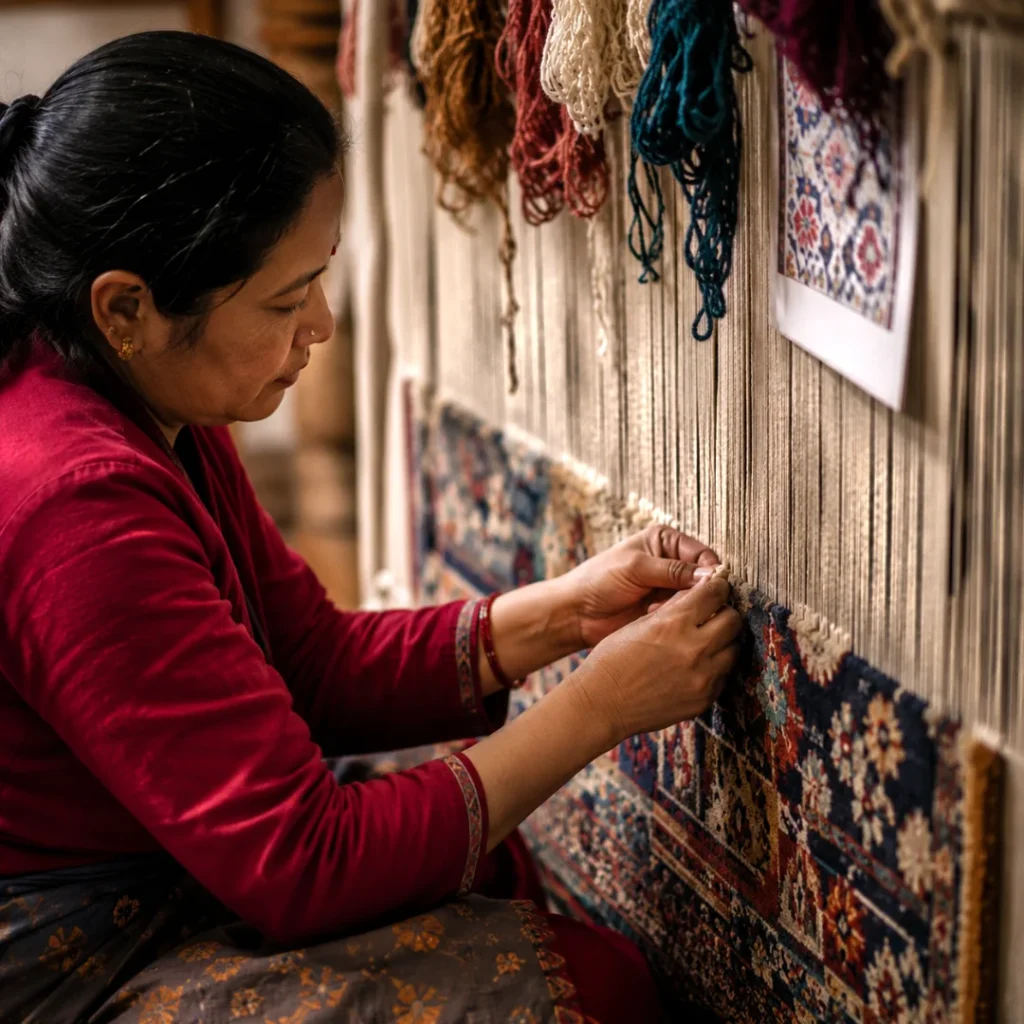
Because handmade rugs are physically constructed knot-by-knot or tuft-by-tuft, they can be engineered to fit massive or irregular floor plates flawlessly. Even in complex residential settings, a custom-sized handmade rug can span an entire open-plan interior, eliminating the need for awkward gaps or multiple smaller pieces that break up the visual flow.
Machine-Made Rugs: Bound by Industrial Limits Machine-made rugs are fundamentally constrained by the physical size of mechanical looms, which generally max out at a width of 4 metres. If a space requires larger proportions, multiple machine-made panels must be stitched or taped together. Over time, these joined seams become highly susceptible to curling edges, visible wear, and pattern misalignment—defects that immediately disrupt the clean lines of contemporary or minimalist interiors.
2. Sustainability & Ethical Sourcing: Natural Fibres vs. Microplastics
Handcrafted Rugs: Low-Impact, Bio-Based Artistry Bespoke handcrafted rugs represent a deliberate rejection of industrial “fast fashion” for interiors. High-end artisanal rugs are crafted from renewable, biodegradable natural materials—such as premium New Zealand Merino wool, raw jute, and luminous bamboo silk.
Unlike synthetic alternatives, natural wool rugs do not shed hazardous microplastics into your living environment or local water systems. Furthermore, selecting a handcrafted piece supports a global and local network of skilled weavers and tufters, preserving time-honored heritage crafts and empowering small-scale artisan communities.
Machine-Made Rugs: Petrochemical Dependency To maintain low price points, the vast majority of machine-made rugs are spun from petroleum-based synthetic fibres like polypropylene, polyester, and nylon. The manufacturing of these synthetic textiles requires intensive fossil fuel energy and chemical consumption. At the end of their relatively brief lifecycles, these rugs cannot decompose, contributing directly to global landfill waste and shedding persistent microplastics for decades.
3. Spatial Perception & Design Adaptability
Handcrafted Rugs: Seamless Integration with the Floor Plan Bespoke handcrafted rugs allow interior designers to work in absolute harmony with the architecture of a room. Rather than forcing a standard, pre-set rectangle into a complex space, handmade rugs can be specified to match unique room profiles:
- Organic Silhouettes: Curved walls, circular entryways, and modern, fluid architecture can be mirrored seamlessly with custom circular, oval, or organic asymmetrical rug shapes.
- The Frame Effect: Made-to-order rugs ensure that exactly the right margin of underlying hardwood or stone flooring is left exposed around the perimeter, achieving perfect spatial balance.
- Bespoke Edge Finishes: Designers can choose between tailored cloth bindings, structured leather borders, or a minimalist, borderless “tucked” finish where the edges are seamlessly folded beneath the weave to let the raw pattern dominate.
Machine-Made Rugs: Rigid Standards Machine-made rugs are restricted to rigid, standardized retail sizes (such as 2x3m or 3x4m). This lack of flexibility frequently results in the “postage stamp” effect, where a rug is too small for a seating arrangement, causing the furniture to look disconnected and leaving the room feeling visually unresolved.
4. Health & Indoor Air Quality: The Hypoallergenic Clean Air Filter
Handcrafted Rugs: Naturally Low-Toxin Foundations Premium natural fibres contribute actively to a healthier indoor climate. Pure wool is inherently hypoallergenic and features microscopic scales that trap airborne dust, pollen, and pet dander at the surface of the pile. This keeps allergens out of your breathing zone until they are easily cleared away with routine, suction-only vacuuming. Furthermore, high-quality handmade pieces use low-impact dyes and natural backings, eliminating chemical exposure in your private spaces.
Machine-Made Rugs: Chemical Off-Gassing and VOCs To structurally secure synthetic fibres, machine-made rugs rely heavily on synthetic latex backings, chemical adhesives, flame retardants, and artificial stain-resistant coatings. These components frequently emit Volatile Organic Compounds (VOCs) like formaldehyde into the home long after installation. This chemical off-gassing can aggravate asthma, allergies, and chemical sensitivities, compromising indoor air quality.
5. Longevity & Timeless Value: Disposability vs. Heirloom Investments
Handcrafted Rugs: An Enduring Legacy While a handcrafted rug requires a higher upfront investment, it represents a long-term strategy. A high-quality hand-knotted or hand-tufted wool rug can endure for generations. Natural wool fibres possess a structural memory that allows them to spring back after being compressed by heavy furniture, and the material ages beautifully, developing a rich patina over time. Should a handmade rug experience a spill or structural damage, its natural construction allows it to be professionally hand-washed, restored, or even resized.
Machine-Made Rugs: Designed for Replacement Machine-made synthetic rugs are functionally disposable, with an average lifespan of just 3 to 5 years in high-traffic zones. Synthetic fibres lack natural elasticity; once traffic flattens polypropylene or polyester loops, the fibres break down and cannot be revived. Stains bind permanently to synthetic plastics, and industrial backings often crack and powder over time, meaning the entire piece must eventually be replaced.
Final Thoughts: Choosing with Intention
- Specify Handcrafted if your project requires flawless proportions, a custom shape, a healthy low-toxin air profile, or a culturally rooted statement piece—such as our traditional Ndebele hand-tufted collections.
- Select Machine-Made if you are outfitting a temporary rental or brief commercial activation where long-term durability and materials do not impact the core vision.
True luxury is defined by the narrative, material integrity, and sustainability of the pieces you bring into your space. By starting from the floor up with a handcrafted foundation, you invest in a design that respects both the environment and the architecture of your home.