Bathroom Rug & Bath Mat Care Guide
Introduction
Bathroom rugs and bath mats work harder than many other floor coverings in the home. They absorb water from wet feet, protect floors from splashes, and provide a safer, less slippery surface around baths, showers, and basins. Because they are constantly exposed to moisture, soap residue, and cosmetics, they require a hygiene-focused care routine to stay clean, fresh, and mould-free.
Understanding Bathroom Rug Materials
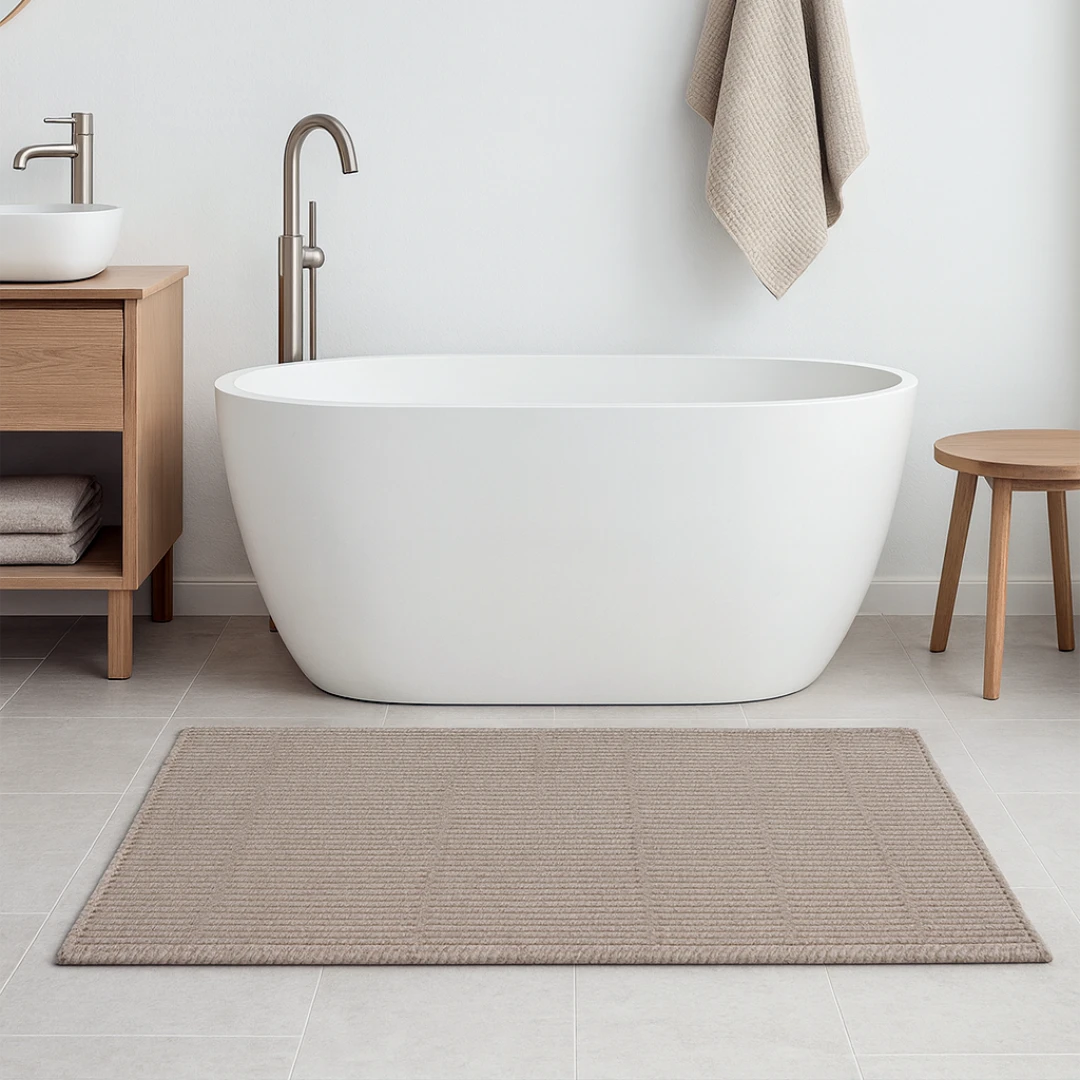
Bathroom rugs and mats are usually made from:
- Cotton or cotton blends, which are soft, absorbent, and commonly machine washable.
- Microfibre, which dries faster and often features a soft, plush pile.
- Memory foam bath mats, with a spongy core and fabric cover for comfort.
- Rubber-backed or non-slip latex-backed mats, designed to grip tiles and prevent sliding.
Each material and backing responds differently to heat, detergents, and dryer cycles, so always check the care label, especially for memory foam and backed products.
Routine Maintenance
To keep bathroom rugs hygienic:
- Shake out the rug daily or every few days to remove hair, dust, and loose debris.
- Hang the mat to dry after each use rather than leaving it flat on a damp floor. Over-door hooks, towel rails, or heated rails are ideal.
- Wash regularly, typically every 1–2 weeks, depending on how many people use the bathroom and how humid the room is.
- Keep the bathroom well ventilated, using an extractor fan or opening a window to help both the rug and the room dry faster.
Regular drying between uses is one of the most important steps for preventing mould and odour build-up.
Washing & Detergents
For most cotton or microfibre bathroom rugs:
- Check the care label for recommended water temperature and cycle type.
- Pre-treat stains, such as makeup or hair dye, with a small amount of liquid detergent or stain remover, testing on an inconspicuous area first.
- Wash on a gentle or normal cycle with a mild detergent. Avoid excessive fabric softener, which can reduce absorbency over time.
- Do not overload the machine; rugs need space to rinse thoroughly.
For memory foam or thick mats:
- Use cool or lukewarm water.
- Select a gentle cycle to protect the foam core.
- Avoid harsh spin speeds that could distort the shape.
For rubber- or latex-backed mats:
- Wash in cold or lukewarm water.
- Avoid very hot water and harsh spin cycles which may cause the backing to crack or crumble.
Drying & Mould Prevention
Correct drying is critical:
- Tumble-dry only if the care label allows it; many cotton and microfibre mats can go into a low or medium heat tumble dry, which helps restore fluffiness.
- For mats with rubber or latex backing, air-dry flat or over a rail, avoiding direct high heat from radiators. Excessive heat can cause backing to become brittle.
- Ensure the rug is completely dry before placing it on the floor again, particularly if your bathroom has limited airflow.
If you notice a musty smell or dark spots, it may indicate mould or mildew. In that case, wash the rug promptly, increase ventilation, and consider replacing very old mats with degraded backings.
Care Guide Spot Cleaning & Everyday Spills
For occasional topical marks:
- Blot or lightly scrub with a cloth dipped in a solution of warm water and mild detergent.
- Rinse with a clean, damp cloth and allow the rug to dry thoroughly.
- Avoid chlorine bleach unless the label specifically states it is safe; it can weaken fibres and backing over time.
Cosmetic and hair product spills may need targeted stain removers. Always test first, and avoid harsh solvents on foam or backing.
Safety, Anti-Slip & Replacement
Bathroom rugs are both comfort and safety items:
- Check anti-slip backing regularly; if it becomes cracked, powdery, or loses grip, it is safer to replace the mat.
- If you use a separate non-slip underlay, wash or wipe this down periodically as well.
- Replace rugs that no longer wash up well, have persistent odours, or show signs of backing breakdown.
Storage & Rotation
If you rotate bathroom rugs seasonally:
- Wash and dry thoroughly before storage.
- Roll (rather than fold) rugs to avoid harsh creases.
- Store in a dry cupboard, not in the bathroom itself.
Rotating between two or three mats per bathroom allows each one more drying time between uses and extends their overall lifespan.
Summary
Bathroom rugs and bath mats handle daily moisture and deserve a consistent hygiene routine. With regular washing, proper drying, and occasional replacement of worn backing, they can remain soft, safe, and fresh — supporting both comfort and cleanliness in one of the most used rooms in the home.
View Bathroom Rugs